The search landscape in Australia has fundamentally shifted. Google, once the undisputed gateway to digital discovery, has transformed from a Discovery Engine into a Utility Engine. Meanwhile, Australian consumers are increasingly turning to social platforms like TikTok, YouTube, and LINE for discovery, recommendations, and purchase decisions.This comprehensive guide provides Australian businesses with a strategic framework for multi-surface SEO – the practice of optimizing content across multiple search platforms to capture fragmented search behavior. Whether you’re targeting Gen Z on TikTok, professionals on LinkedIn, or the diverse Asian-Australian community on LINE, this playbook delivers platform-specific tactics backed by real Australian market insights.
Understanding Modern Search Behavior: The Great Fragmentation
How Australian Consumers Search Today
The traditional search funnel has splintered. Instead of a linear journey from Google search to purchase, Australian consumers now navigate a complex ecosystem of platforms, each serving distinct purposes:Table
Intent Type
Primary Platform
Australian Usage Context
Buy
Amazon, eBay
Australians spent $62.3 billion online in 2025
Discover/Feel
TikTok, Instagram Reels
8.5 million Australian TikTok users; 52% discover products here first
Verify/Trust
Reddit, YouTube reviews
Australians trust peer reviews 3:1 over brand messaging
Plan
Pinterest, Instagram
Strong usage for travel, weddings, home renovation
Navigate/Transact
Google Maps, Search
Still dominant for local “near me” queries
Connect (APAC)
LINE, WeChat
Critical for Australia’s 1.4 million Asian-language speakers
Why Google Became a Utility Engine
Google hasn’t lost relevance – it’s changed function. When Australians know exactly what they want, they still Google it. But when they’re exploring, seeking recommendations, or validating choices, they’re increasingly looking elsewhere.Key Statistics for Australian Marketers:
40% of Gen Z Australians prefer TikTok over Google for search
YouTube is the second-largest search engine in Australia after Google
LINE has 800,000+ active users in Australia, primarily within Asian communities
67% of Australian online shoppers use multiple platforms before purchasing
Platform 1: TikTok SEO Optimization for Australian Markets
Understanding TikTok as a Search Engine
TikTok isn’t just entertainment – it’s a search engine. Australian users search TikTok for:
Product reviews and demonstrations
“Day in the life” content for career exploration
Local business recommendations (“best cafes in Melbourne”)
How-to tutorials and educational content
Trend discovery and cultural moments
TikTok SEO Tactics for Australian Businesses
1. Keyword Research for TikTok
TikTok’s search behavior differs from Google. Focus on:
Conversational phrases: “Is it worth it?” “Honest review” “Before and after”
Local qualifiers: “Sydney” “Melbourne” “Brisbane” “Australian”
Trending sounds and hashtags: Monitor #Australia #AusSmallBiz #SydneyEats
Tools:
TikTok Creative Center (trends and hashtags)
TikTok Search autocomplete suggestions
Third-party tools like Pentos or Exolyt
2. Content Structure for Maximum Discoverability
plainCopyHook (0-3 seconds):“3 Australian skincare brands that actually work ☀️”Value Delivery (10-30 seconds):Quick demonstrationAuthentic reviewClear comparisonCTA (final 3 seconds):“Follow for more honest Aussie reviews”
3. SEO-Optimized Elements
Video SEO:
Include target keywords in on-screen text
Use trending sounds with relevant lyrics/themes
Post consistently (3-5x weekly for Australian audiences)
Optimize for “For You Page” via high watch-time
Profile SEO:
Keyword-rich bio: “Australian SEO Agency | TikTok & Google Tips 🇦🇺”
Link in bio to optimized landing page
Consistent posting schedule
4. Australian-Specific TikTok Opportunities
Small Business Saturday (#AusSmallBiz): High engagement for local brands
Local Landmarks: Feature recognizable Australian locations for geo-targeting
Platform 2: LINE Search Optimization for Australian-Asian Markets
Why LINE Matters in Australia
With over 800,000 active users in Australia – primarily Chinese, Japanese, Korean, Thai, and Vietnamese communities – LINE represents a crucial but often overlooked search platform. For businesses targeting Australia’s multicultural communities, LINE optimization is optimal.
LINE SEO Strategies
1. LINE Official Account Optimization
Profile Setup:
Business name in English + native language (e.g., “Marketing 营销”)
Keyword-rich description mentioning services and locations
Australian phone number and address for local trust signals
Content Strategy:
Post 1-2x daily in target community language
Mix promotional (20%) and value content (80%)
Use LINE’s rich media capabilities (carousels, coupons, QR codes)
2. LINE Today & LINE NEWS
LINE’s news aggregator appears in search results within the app. To appear:
Partner with Asian-language media outlets in Australia
Submit press releases to SBS, SBS中文, or community newspapers
Create newsworthy content about your business
3. LINE Shopping & E-commerce
For retail businesses:
Set up LINE Shopping integration
Offer LINE-exclusive promotions
Use LINE Pay for frictionless checkout
4. Community Groups and Forums
Join relevant LINE groups (with admin permission)
Provide value before promotion
Build relationships with community influencers
Platform 3: YouTube SEO for Australian Audiences
YouTube as Australia’s Second Search Engine
YouTube processes billions of searches monthly in Australia. Unlike TikTok’s entertainment focus, YouTube users have high intent – they’re actively seeking information, tutorials, and reviews.
Industry Updates: “What’s New in [Industry] 2026 Australia”
Platform 4: AI Search Optimization for Australian Businesses
The Rise of AI Search in Australia
ChatGPT, Perplexity, Claude, and Gemini are increasingly used by Australian professionals for research and decision-making. Unlike traditional SEO where you optimize for ranking positions, AI search requires optimizing for inclusion in AI-generated responses.
AI Search Optimization Strategies
1. Structure Content for AI Consumption
AI models prefer:
Clear headings and subheadings
Bulleted and numbered lists
Direct answers to specific questions
Structured data and schema markup
FAQ sections
Format:plainCopyH2: What is Multi-Surface SEO?[2-3 sentence clear definition]H3: Key Components of Multi-Surface SEOComponent 1: DefinitionComponent 2: DefinitionComponent 3: DefinitionH3: Why Australian Businesses Need Multi-Surface SEO[Direct answer with Australian statistics]
2. Answer Specific Questions
Create content that directly answers:
“What is [concept] in Australia?”
“How does [topic] work for Australian businesses?”
“Best [solution] for [audience] in Australia”
3. Build Topical Authority
AI models favor sources that demonstrate comprehensive coverage:
Create pillar pages covering broad topics
Link to detailed cluster content
Update content regularly with new information
Cite authoritative Australian sources
4. Technical Implementation
Schema Markup:JSONCopy{“@context”: “https://schema.org”,“@type”: “Article”,“headline”: “Multi-Surface SEO Guide for Australian Businesses”,“description”: “Comprehensive guide to TikTok, LINE, YouTube and AI search optimization”,“author”: {“@type”: “Organization”,“name”: “SEO Australia Online”}}
Creating a Unified Multi-Surface SEO Measurement Framework
The Challenge: Fragmented Analytics
Each platform has its own analytics, making unified reporting difficult. Here’s a framework to consolidate insights:
Cross-Platform KPI Dashboard
Table
Metric
Google
TikTok
LINE
YouTube
AI Search
Discovery
Impressions
Video Views
Message Opens
Impressions
Brand Mentions
Engagement
CTR
Watch Time
Click Rate
Avg View Duration
Citations
Conversion
Conversions
Profile Clicks
Link Clicks
CTR to Website
Referral Traffic
Authority
Backlinks
Shares
Saves
Subscribers
Featured Snippets
Recommended Tools for Australian Businesses
All-in-One Analytics:
Google Analytics 4 (cross-platform UTM tracking)
Brandwatch or Meltwater (brand mention monitoring)
Sprout Social (social media analytics)
Platform-Specific:
Google Search Console + GA4
TikTok Analytics
LINE Official Account Manager
YouTube Studio
Attribution Modeling
Use multi-touch attribution to understand how platforms work together:Example Customer Journey:
Discovers brand on TikTok (awareness)
Validates on YouTube (consideration)
Searches Google for “[brand] reviews Australia” (validation)
Converts via direct website visit
Action: Ensure consistent messaging and UTM tracking across all touchpoints.
Implementation Roadmap for Australian Businesses
Phase 1: Foundation (Weeks 1-4)
Audit Current Presence:
[ ] Google Search Console review
[ ] Social platform account audits
[ ] Competitor analysis across all platforms
[ ] Content gap analysis
Quick Wins:
[ ] Optimize existing Google content for AI search
[ ] Update YouTube video descriptions with timestamps
❌ Mistake: Creating content for Google, then cross-posting identical content to TikTok.✅ Solution: Adapt content for each platform’s unique format and user behavior.
2. Ignoring Cultural Context
❌ Mistake: Using US or UK examples for Australian audiences.✅ Solution: Reference Australian locations, seasons, currency, and cultural touchpoints.
3. Neglecting Measurement
❌ Mistake: Optimizing without tracking cross-platform impact.✅ Solution: Implement UTM parameters and multi-touch attribution from day one.
4. Focusing Only on English
❌ Mistake: Ignoring Australia’s multicultural communities.✅ Solution: Consider LINE, WeChat, and multilingual content for relevant demographics.
Conclusion: The Future of Search is Multi-Surface
The fragmentation of search isn’t a trend – it’s the new reality. Australian businesses that adapt to multi-surface SEO will capture attention across the entire customer journey, from TikTok discovery to Google conversion.
Key Takeaways:
Google remains essential but functions differently – as a utility, not a discovery platform
TikTok and YouTube are now primary discovery engines for Australian consumers
LINE matters for Australia’s significant Asian-language communities
AI search requires structured, authoritative content with clear answers
Measurement must be unified across platforms to understand true impact
The businesses that thrive in 2026 and beyond won’t ask “Should we focus on Google or TikTok?” They’ll ask “How do we create a cohesive presence across all surfaces where our customers search?”
Search engine optimisation, or SEO, is all about making your website more visible in search engines like Google. It’s not just a buzzword; it’s a crucial strategy for driving organic traffic to your site. With millions of searches happening every day, mastering SEO can be the difference between being found or getting lost in the digital crowd.
You might wonder what goes into a solid SEO strategy. It involves everything from keyword research to on-page and off-page optimisation, all aimed at improving your site’s ranking. By understanding these elements, you can enhance your content’s appeal to both users and search engines, eventually boosting your online presence. Let’s jump into the essentials of SEO and explore how it can transform your digital marketing efforts.
What is SEO?
SEO, or search engine optimisation, refers to a set of practices aimed at improving a website’s visibility in search engine results. It’s essential because approximately 90% of web users don’t venture past the first page of search results. By optimising web pages, you signal to search engines, like Google, that your content deserves a high ranking.
At its core, SEO revolves around four critical components: keyword research, on-page optimisation, off-page optimisation, and technical SEO. Keyword research involves identifying the terms and phrases your target audience uses when searching for information relevant to your site. This information guides your content development.
On-page optimisation focuses on making your web pages more appealing to both users and search engines. It includes elements like titles, headings, and meta descriptions. Off-page optimisation pertains to building your site’s reputation through backlinks from other reputable sites. These links act as endorsements, boosting your credibility.
Technical SEO looks at the underlying framework of your site, ensuring it’s accessible and easy to navigate. Factors like site speed, mobile-friendliness, and structured data play significant roles in overall SEO performance.
Effective SEO practices enhance organic traffic, brand awareness, and user engagement. By consistently applying these techniques, you increase your chances of ranking higher in search results. Next, let’s investigate deeper into the necessity of keyword research and how it shapes your SEO strategy.
How do search engines work?
Search engines index approximately 43 billion pages on the web as of September 2024, enabling users to find relevant information quickly. The process involves three key phases: crawling, indexing, and ranking.
Crawling begins with web crawlers, also known as spiders or bots, which visit and download webpages by following links from known pages. For instance, if a page about used clothing on Patagonia’s site contains internal links to pages on used jackets or flannel shirts, the crawler tracks these links to discover new content. It’s crucial to ensure your website has clear links to help this process.
Indexing happens next. Once a page is crawled, the search engine analyses its content and metadata and adds it to a massive database. Not every page gets indexed. The decision depends on the quality and relevance of the content. If the content on your page lacks substance or fails to address users’ queries, it may not make it into the index at all.
Ranking is the final phase. When you perform a search, algorithms assess a range of factors—like page relevance and quality—to determine which pages to show first. The exact workings of these algorithms remain largely undisclosed, leading to ongoing experimentation in search engine optimisation (SEO). Factors considered may include keywords, site speed, and mobile-friendliness.
Understanding these phases provides insights into how you can optimise your content effectively, laying the groundwork for targeted keyword research and enhanced visibility in search results.
How is SEO different from SEM and PPC?
SEO focuses on organic search outcomes, making up about 53% of traffic, while SEM combines both paid and unpaid strategies to improve visibility. SEM serves as an umbrella term that encompasses SEO and PPC. This means that when you’re investing time into SEO, you’re setting the groundwork for your organic search presence. It’s all about optimising your site to rank higher without direct costs tied to clicks.
SEO vs. SEM
SEO prioritises unpaid search results, driving organic traffic by enhancing site quality and relevance. SEM, on the other hand, leverages both organic and paid tactics to amplify visibility, with paid listings often appearing above organic results. You optimise for SEO by focusing on comprehensive keyword research, high-quality content, and strategic backlinks, while SEM requires skill in campaign management, including budgeting and bidding for keywords. While both strategies work in tandem, SEO offers long-term value, whereas SEM delivers immediate visibility.
SEO vs. PPC
SEO earns organic clicks from search engines without any financial expenses, whereas PPC requires advertisers to pay each time a user clicks on their ads. In fact, PPC can account for up to 60% of all clicks in competitive industries where instant visibility is crucial. While SEO builds credibility and trust over time, PPC provides quicker access to search results. You might prefer SEO for sustainability, whilst PPC can cultivate fast exposure for time-sensitive promotions. Understanding both can help you craft the right strategy for your goals, blending the strengths of each method to enhance your online presence.
Why is SEO important?
SEO drives approximately 53% of all website traffic from search engines, highlighting its essential role in digital marketing strategies. Every time someone searches for a product, service, or information, effective SEO can position your website right where users can find it. Competing for those prime spots in search results not only enhances visibility but also enables you to reach potential customers right when they’re looking for what you offer.
Two main factors underscore the significance of SEO for businesses. First, people rely heavily on search engines, with trillions of searches executed annually. By optimising your site, you can harness that demand, attracting organic traffic without the financial burden tied to paid advertising. Second, traffic generated through SEO is free, providing sustainable benefits over time. In fact, websites that perform well in organic search can enjoy consistent visits month after month.
SEO fosters trust and credibility. Users tend to regard high-ranking sites as more authoritative and reliable, which can translate into higher conversion rates. Plus, while other marketing avenues may yield temporary results, a well-optimised site often reaps rewards long after the initial investment.
As you consider your digital strategy, understanding how SEO functions and its broader implications will guide you towards greater visibility in search results. Next, let’s investigate into how SEO works, providing insights into the mechanisms that can elevate your online presence.
Which SEO factors influence search engines?
Search engines evaluate over 200 factors when ranking pages, with relevant keywords and quality content being foundational. Keyword optimisation ensures that your content aligns with what users search for, acting as a bridge between their needs and what you offer. The inclusion of keywords in titles, headings, and body text influences how search engines interpret your content’s relevance.
Site speed plays a crucial role too. A faster loading website enhances user experience, which search engines consider for rankings. Studies reveal that 70% of users abandon a site that takes more than three seconds to load, underscoring the importance of speed. Mobile-friendliness also impacts rankings, especially with mobile traffic constituting more than half of all internet usage. Optimising your site for mobile ensures users have a seamless experience, boosting your credibility in the eyes of search engines.
Backlinks constitute another key factor. When reputable sites link to your content, it signals to search engines that your site holds authority. It’s not just about the number of backlinks but their quality as well. A single link from a trusted site can outweigh many links from less credible sources.
On-page optimisation enhances your site’s structure and makes it easier for search engines to crawl and index content. Elements such as meta descriptions, image alt text, and internal linking improve clarity while guiding users directly to what they’re looking for.
Technical SEO underpins all these factors, ensuring your website runs smoothly. If your site’s not accessible, users and search engines will struggle to find it. Understanding these aspects equips you to refine your strategy, enhancing your position in search results.
On-page SEO
On-page SEO refers to the strategies you carry out directly on your website to improve its search visibility. It plays a crucial role in shaping how search engines interpret your site’s content, thereby affecting your ranking in search results.
Use Keywords In Your Content
Keywords are the backbone of on-page SEO. You should incorporate relevant keywords throughout your content, particularly in key areas such as headings, subheadings, and the body text. Aim to use primary keywords about 1-2% of the total word count for best results without keyword stuffing, which Google flags as spam. Researching and understanding user intent helps in selecting the right keywords that reflect what people search for, driving relevant traffic to your site. This brings clarity, boosting engagement and chances of conversion while laying the groundwork for your next strategies.
Optimize Your Meta Description for Clicks
Meta descriptions matter. Although they don’t directly impact rankings, a compelling meta description can increase click-through rates significantly. Aim for 155-165 characters, summarising the page’s content and including your primary keyword in a conversational tone. Make it enticing by stating a clear benefit or call to action. For instance, instead of a dry summary, you could invite users by stating, “Discover how to enhance your site’s SEO for better visibility!” This approach can lure in visitors, establishing the connection between their search intent and your offerings effectively.
Optimize Your Images
Images play a crucial role in user engagement and SEO. You should always use relevant, high-quality images that enhance the content. Also, optimising file sizes promotes faster loading times. Use descriptive file names and alt texts to help search engines understand context, and include your keywords where appropriate. Did you know that images can appear in search results too? By optimising images, you not only enrich the user experience, you also create alternative paths for traffic, enhancing your overall on-page SEO strategy.
Ensure Your Content Aligns With The Intent Of The Query
Aligning your content with the intent behind user queries is vital for your SEO efforts. You must assess whether the search results are addressing a specific need—like informational content, product listings, or a top-10 list. If users seek a top-10 list, your content should deliver precisely that. Understanding the variances in intent ensures you meet user expectations effectively. Engaging with your audience meaningfully can set you apart, driving stronger connections and fostering loyalty.
Technical SEO
Technical SEO comprises various strategies to enhance your website’s visibility, focusing on backend elements that search engines scrutinise. By prioritising technical SEO, you help ensure search engines index and rank your site effectively.
Create a Useful Site Architecture and Leverage Internal Linking
A solid site architecture promotes a seamless user experience and effective search engine crawling. Aim for a structure that lets users access any page in three clicks or less. Leverage internal linking by using precise anchor text that reflects relevant keywords. Google evaluates the context around these links, so make it semantically accurate. Nest URLs logically in a hub style, enhancing navigability and ranking potential.
Optimize For Mobile
With over 60% of traffic coming from mobile devices, optimising for mobile isn’t just a bonus; it’s a necessity. Google prioritises mobile-first indexing, meaning the mobile version of your site is crucial for ranking. Ensure designs adapt well across different screen sizes and load quickly. Carry out responsive design principles, streamline content, and optimise images to maintain speed without sacrificing quality. A mobile-friendly site increases user satisfaction and conversions.
Measure and Optimize For PageSpeed
Every second counts, especially when 53% of users abandon pages that take longer than three seconds to load. Regularly measure your site’s page speed using tools like Google PageSpeed Insights. Optimise images, minify CSS or JavaScript, and reduce server response times to enhance loading speed. A faster site improves user experience and boosts your search rankings, creating a cycle of engagement and higher visibility.
Set Up HTTPS
Deploying HTTPS can increase your rankings, as Google favours secure sites. When your website uses HTTPS, it establishes a secure connection through encryption, protecting user data and enhancing credibility. Plus, with growing concerns around online privacy, users are more likely to trust and engage with secure sites. Make the switch to HTTPS for not just better SEO, but also to build trust with your audience.
Off-page SEO
Off-page SEO plays a crucial role in enhancing your website’s authority and visibility, contributing significantly to your site’s overall ranking. By fostering relationships outside your website, you create valuable signals that search engines use to assess the credibility and relevance of your content.
E-E-A-T
E-E-A-T stands for Experience, Expertise, Authoritativeness, and Trustworthiness. Getting these elements right can set you apart in the crowded online space, especially since 70% of consumers trust user reviews, which reinforce your site’s authority. Search engines favour content created by individuals or entities with demonstrated credentials. Hence, your site’s strength lies in presenting content that showcases your expertise, backed by solid evidence and user trust signals. Building a reputation for high-quality content not only boosts your visibility but also invites users to engage. As you nurture these attributes, you’ll naturally lay the groundwork for acquiring high-quality backlinks, the next stepping stone in your off-page SEO journey.
Focus on High-Quality Backlinks
High-quality backlinks are essential for SEO success. Links from reputable websites signal to search engines that your content is valuable. Google categorises links based on the tier of the page; higher-tier pages, like popular news outlets, provide more significant ranking advantages. Securing links from these authoritative sources can elevate your site’s position in search rankings. Aim for a diverse backlink portfolio, involving guest blogging or collaborations with industry leaders. The effort pays off—websites with high-quality backlinks generally see a 25-50% increase in organic traffic. To solidify your site’s credibility, focus on gathering these high-quality links, which creates an excellent segue into the importance of building your brand.
Create a Brand
Creating a robust brand presence is vital in today’s digital world. A well-established brand not only resonates with your audience but also amplifies your SEO efforts. With over 80% of consumers opting for familiar brands, making your brand visible across multiple channels is a smart move. Utilise online directories, social media profiles, and awards to enhance brand recognition. When you distribute your brand widely, Google takes note, considering your site more legitimate and trustworthy. From leveraging social media to engaging in community forums, every interaction builds your brand authority. As you solidify your brand’s footprint, you strengthen your position in the SEO race, naturally enhancing your off-page strategy.
How does SEO work?
SEO functions through an intricate system that enhances a website’s visibility in search engines, driving approximately 53% of all website traffic from organic results. Understanding this system’s mechanics is crucial for optimising your content effectively.
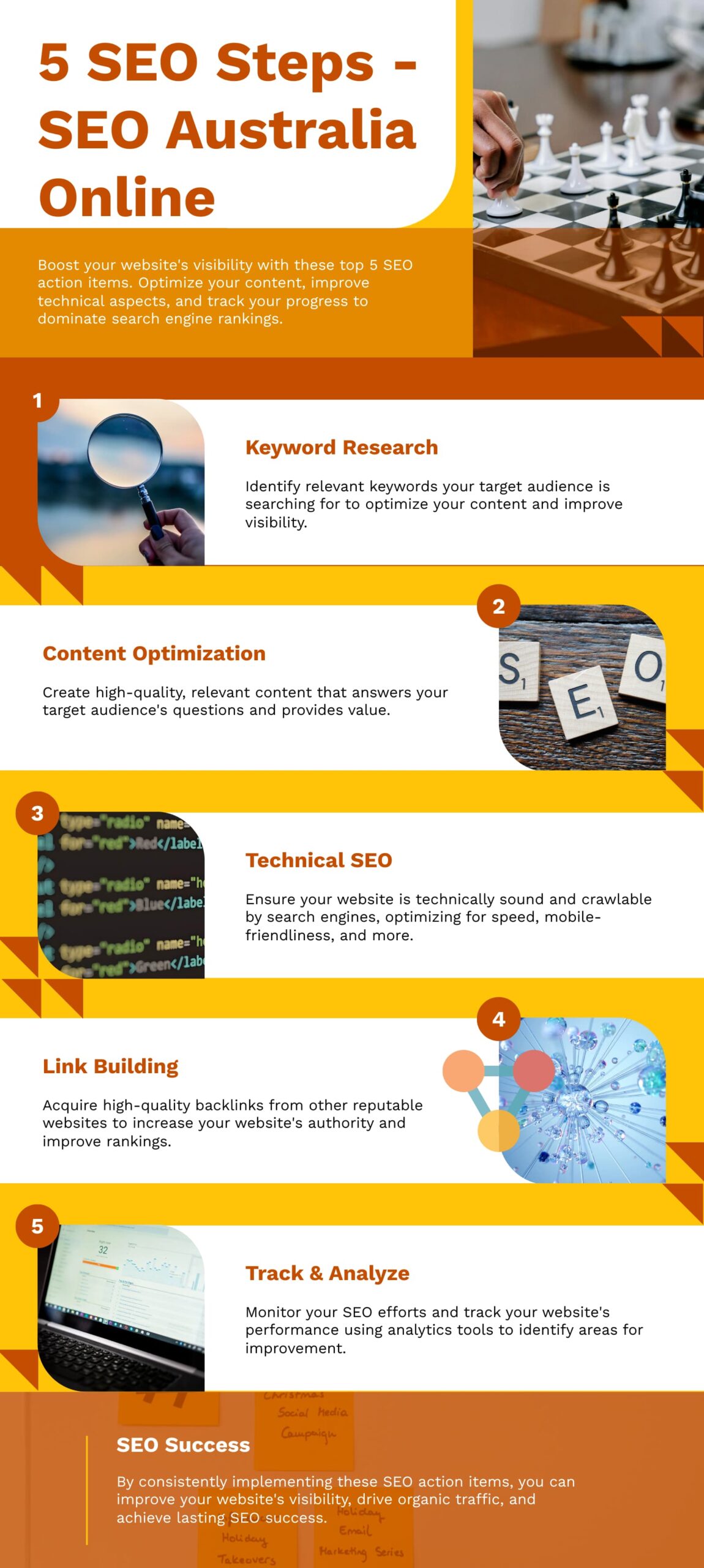
1. Understanding How Search Engines Work
Search engines operate mainly through three phases: crawling, indexing, and ranking. During crawling, bots scour the web, following links to discover new pages. Next, in the indexing phase, searched content gets analysed and stored in a massive database. Finally, algorithms determine the ranking of pages based on relevance and quality. Knowing how search engines function sets the stage for your SEO efforts.
2. Researching
Effective SEO starts with keyword research. You should identify terms that your audience uses in search engines. Tools like Google Keyword Planner or Ahrefs can assist in finding relevant keywords with high search volumes. This groundwork not only guides your content creation but helps position your site as a go-to resource. With the right keywords in hand, you’re ready to move forward.
3. Planning
Planning your SEO strategy means mapping out how to incorporate identified keywords into your content. It involves designing a clear structure for your website and creating a content calendar. Outlining what topics to tackle and when can keep your content fresh and relevant. A solid plan ensures your keywords are strategically placed throughout your site, maximising visibility when potential customers search.
4. Creating and Implementing
Creating quality content is vital in SEO. Your content should not just be keyword-stuffed but also engaging and informative. Incorporate keywords naturally in headings, body text, and meta descriptions. Ensure formatting is user-friendly, as this enhances readability and encourages longer visits. When you carry out these best practices, you boost both user experience and search engine rankings.
5. Monitoring and Maintaining
Monitoring your site’s performance is essential to stay ahead in SEO. Tools like Google Analytics offer insights into user behaviour and traffic sources. Regularly check for broken links or slow-loading pages as these factors can negatively impact rankings. Keeping your website in good shape helps maintain visibility and keeps users coming back.
6. Analyzing, Assessing and Reporting on Performance
Regular analysis of your SEO performance ensures your strategies remain effective. Set key performance indicators (KPIs) like organic traffic growth or conversion rates to measure success. If results aren’t meeting expectations, reassess your approach and make necessary adjustments. Reporting on performance not only keeps you informed but also highlights areas for improvement.
SEO Is Ongoing
SEO isn’t a one-and-done deal; it’s a continual process. The digital world evolves, as do search engine algorithms, so stay updated on industry changes. Regular updates to your content and strategies keep your site relevant and visible. By approaching SEO as an ongoing effort, you can build a sustainable online presence that adapts to changing trends and user needs.
How SEO evolves
Search engine optimisation (SEO) continually adapts to changes in technology and societal trends. With around 60% of searches conducted on mobile devices, it’s crucial for SEO strategies to support mobile usability and loading speeds. You can maximise engagement by incorporating responsive design that caters to diverse screen sizes. Besides, emerging technologies, like voice search, require a rethinking of keyword strategies. Focusing on natural language queries improves chances of ranking higher for voice searches.
Adapting to Technology
SEO’s evolution reflects advances in technology. For instance, artificial intelligence plays a significant role in how search engines interpret content, with AI-powered algorithms assessing quality signals like E-E-A-T. Sites prioritising user experience see positive impacts, as 75% of users judge a website’s credibility based on its design. Adapting to these tech-driven changes means staying updated; frequent audits and innovation can help maintain relevance. As you embrace artificial intelligence and machine learning tools, your SEO can enhance visibility and user satisfaction.
Adapting to Society
SEO’s evolution isn’t just about tech; it’s about adapting to societal shifts. With 72% of consumers insisting on brand authenticity, integrating social media signals and user-generated content helps in building trust. Audience preferences change, and understanding these shifts is vital. Staying tuned to online conversations and trending topics makes your content relevant and relatable. As society becomes more conscious of data privacy, transparency in how you collect and use data fosters trust. Engaging with your audience through personalised content increases loyalty and keeps you ahead of competitors.
SEO as a service
Embracing SEO as a service can transform your online presence. By implementing effective strategies you can significantly enhance your website’s visibility and attract more organic traffic. It’s not just about ranking higher; it’s about reaching your target audience and building trust.
Staying updated with the latest trends and algorithm changes is crucial. Regularly auditing your SEO practices ensures you remain competitive in an ever-evolving digital world. Eventually investing in SEO is investing in your brand’s future. Prioritising these strategies can lead to sustainable growth and increased user engagement.
Frequently Asked Questions
What is the main purpose of SEO?
SEO, or Search Engine Optimization, aims to enhance a website’s visibility in search engine results. By improving optimisation strategies, websites can attract organic traffic, which is crucial for increasing brand awareness and conversion rates.
How does SEO differ from SEM?
SEO focuses solely on improving organic search rankings through various techniques, while SEM (Search Engine Marketing) encompasses both paid and unpaid strategies to promote websites in search engines, including pay-per-click advertising.
Why is keyword research important?
Keyword research identifies the terms and phrases potential customers use to find products or services. Optimising content with these keywords helps improve search rankings and ensures the website aligns with user intent.
What are some on-page SEO techniques?
On-page SEO techniques include optimising title tags, meta descriptions, header tags, and images, ensuring keyword relevance, and improving content quality to enhance user experience and search engine rankings.
What is technical SEO?
Technical SEO involves optimising the underlying architecture of a website to improve crawling and indexing. Key elements include site speed, mobile-friendliness, secure connections (HTTPS), and a clear site structure.
How often should I update my SEO strategy?
Maintaining an effective SEO strategy requires regular updates. Consider reviewing your content and optimisation techniques every few months, especially as search engine algorithms and user behaviours evolve.
What role do backlinks play in SEO?
Backlinks are links from other websites to your page. They signal search engines that your content is credible and valuable, which can enhance your site’s authority and improve its ranking in search results.
How can I measure my SEO performance?
You can measure SEO performance using various metrics such as organic traffic, conversion rates, keyword rankings, bounce rates, and overall engagement. Tools like Google Analytics and Search Console provide detailed insights.
Is SEO a long-term strategy?
Yes, SEO is a long-term strategy that requires consistent effort and regular updates. While some results can be seen quickly, substantial improvements in rankings and traffic typically take months to achieve.
How can I enhance mobile SEO?
To enhance mobile SEO, ensure your website is mobile-friendly, optimise page loading speeds, use responsive design, and structure content for easy navigation. Additionally, consider voice search keywords as mobile usage rises.
Imagine the ease of finding your business at the top of Google Maps when someone in your locality searches for services or products you offer. That’s the power of local SEO, a strategy that enables businesses to rank higher in local search queries, be that in local map packs in SERPs or in Google/Apple/Bing Maps. Local SEO is crucial because it aligns with the immediate needs of searchers, providing visibility to brick-and-mortar businesses in an increasingly online world.
This guide will commence by equipping you with knowledge about conducting local keyword research, emphasizing the importance of finding terms that resonate with your nearby audience. Following sections will guide you through optimizing your Google Business Profile, utilizing powerful local SEO tools, refining on-page SEO strategies for localization, building backlinks from influential local websites, leveraging citations, and finally, monitoring your progress to hone your local SEO tactics continually. Welcome to your journey towards becoming a local SEO connoisseur.
What is local SEO and why is it important?
Local SEO, or search engine optimization, focuses on boosting a business’s online presence to draw more customers from local searches on platforms like Google. It’s crucial for businesses to be found in these searches, as 30% of mobile queries are location-related, and 78% of those local searches result in a physical store visit within a day.
This form of SEO is especially vital for businesses with a physical location, like stores and service providers, since it helps them appear in prominent spots in location-based results, such as Google or Bing Search and Google Maps. Such visibility is critical, as evidenced during the Covid-19 pandemic when 56% of consumers turned to local stores for their shopping needs.
Participating in local SEO means tapping into the billions of local search outcomes Google generates monthly. It’s about connecting with potential customers who conduct online research before making purchases. By making local SEO a part from your overall SEO strategy, you cater to high-intent search queries and ensure that your business is just a click away from happy customers ready to visit your physical location or engage with your services.
Conduct local keyword research
Conducting local keyword research is a fundamental step in a local SEO strategy. This process entails identifying the specific keywords and phrases that your potential customers use when they’re searching for products or services in your region. By pinpointing these terms, business owners can better understand how to tailor their content and SEO efforts to meet the search intent of customers.
Using SEO tools like KeywordsFX, KeywordTool, and Ahrefs can offer invaluable data, including insights about monthly search volume, cost per click, and the competitiveness of certain keywords. However, it isn’t enough to simply gather a random list of keywords; you need to select words and phrases that hold the most value for your business, aligning with the relevant search queries your potential customers are using. Hot Tip: Filter your competition by Local Pack SERP features in Ahrefs to get a list of queries people search related to you.
Long-tail keywords, which commonly contain three or more words, are typically recommended. The reason is that these keywords are more specific and often have lower competition, which can make them easier to rank for in search rankings. Additionally, they also tend to be more in line with Voice search and AI searches.
Determine the terms and phrases your target audience is using to search for local businesses
Remember, local SEO keyword research is not a one-time task; it’s a continual process of fine-tuning. While it starts with a thorough analysis to establish a baseline, maintaining a sharp and updated list of keywords is necessary to remain relevant and search-worthy in the eyes of potential customers and search engines. Consider current events and news to stay ahead.
When it comes to query semantics there should always be a close semantic relation between your chosen terms and your overall site N-grams. In other words, do not target keywords that are not really related.
Use keyword research tools to find local keywords with high search volume and low competition
Once you’re set to uncover local keywords, it’s important to balance high search volume with low competition. Tools such as Google AdWords Keyword Planner are designed for this very purpose. Such tools assist in filtering through countless keyword options to reveal the ones most likely to return local traffic without putting you in an uphill battle against too many competitors.
Moreover, don’t underestimate the value of geo-specific tools like Semrush, which can pinpoint localized search terms based on user location. This can make a significant difference, as local search engines frequently prioritize results that are not just relevant, but also near the searcher.
Your local SEO content strategy should pivot on integrating these local terms into your web pages strategically. Opt for keywords that accurately reflect your offerings and mirror the local market’s demand. It’s this crucial combination—high search volume and low competition—that can propel your business forward, increasing your chances of capturing the attention of potential customers who are actively seeking what you provide.
Regularly revisiting your keyword selections and continuously adapting to changing search patterns helps maintain online visibility, ensuring you remain front-and-center in the local marketplace.
Optimize your Google Business Profile
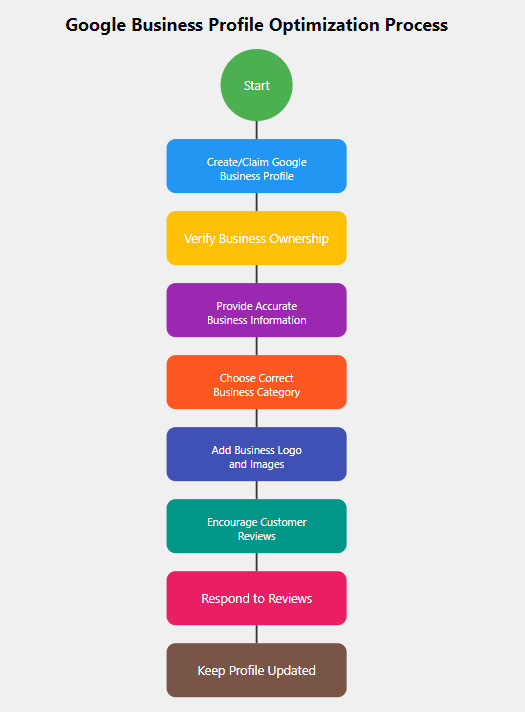
Optimizing your Google Business Profile (formerly known as Google My Business) is done via the Business Profile Manager found at https://business.google.com/locations. An optimized Business Profile provides potential customers with important information about your business and enhances your digital presence.
To optimize your Business Profile, follow these steps:
Verify your business ownership through the methods provided by Google to ensure the listing’s authenticity.
Provide accurate, comprehensive business information including your business name, physical location, phone number, and website. Exact Matching works, so if you name yourself based off a keyword you will generally be more visible.
Choose the correct category that best fits your business to help Google match your business with the right search queries. Semantics matter, so consider the Description.
Add your business logo, images of your products, services, and location to enhance your profile’s appeal.
Encourage customers to leave reviews by providing excellent service and follow up with a polite request for feedback. Reviews are a really large factor in local rankings and should be a strong focus.
By actively managing and updating your Google Business Profile, you can ensure that your business stands out and is easily accessible when potential customers search for the products or services you offer.
Keep your profile up to date with accurate business information
Maintaining up-to-date and accurate business information is vital for matching your services with relevant local searches. Regularly review your Google Business Profile to ensure that all details are current and correct. This includes:
Physical address: Double-check for accurate spelling and formatting and this must match your web assets.
Phone number: Ensure it’s the correct direct line for customer inquiries.
Business hours: Update promptly for holidays or special events.
Accepted payment methods: List all forms of payment you accept to avoid any customer confusion.
Product or service details: Clearly describe what you offer, ensuring you utilize relevant keywords and phrases.
Remember, actively updated profiles signal to Google that your business is active, which can positively influence your rankings. More importantly, accurate information serves your potential customers by providing them with dependable knowledge about your business, thus fostering trust.
Encourage and respond to online reviews
According to a recent study conducted by Brightlocal, 87% of consumers revealed that they consider reviews and ratings from regular customers to have a stronger influence on their buying choices compared to opinions from influencers or celebrities, which only influenced 50% of respondents. Positive reviews can have a significant impact on potential customers and can also contribute to improving your search rankings. Here are some tips on effectively managing your online reviews:
Politely ask your satisfied customers to leave a review about their positive experience. You can generate a quick review link in your Business Profile that leads directly to the Review Panel, lowering friction for customers.
Respond promptly to all reviews, whether they’re positive or negative. Hot-Tip: Use keywords people search in responses.
Address customer concerns sincerely in the case of negative feedback, offering solutions when possible. Do not be confrontational.
Use positive reviews to highlight the strengths of your business and thank customers for their support.
By demonstrating that you value customer feedback and are willing to engage, you not only build trust among your clientele but also appeal to Google’s ranking factors that favor businesses with positive, high-quality reviews.
Remember to keep each response personalized rather than using generic replies, as this shows genuine care for your customers and can encourage others to leave their feedback.
Utilize local SEO tools
Local SEO tools can be helpful if your business model relies on multiple locations. These tools help businesses manage citations, monitor search performance, and uncover opportunities to attract more organic traffic – especially from potential customers making mobile searches and using voice search. Citations, which refer to mentions of your business name, address, and phone number (NAP Details) on the web, are integral to improving your online credibility and strengthening your entity’s presence in search engine optimization.
One notable local SEO tool for managing citations is Whitespark Local Citation Finder. This user-friendly application from SEMrush helps business owners discover where to list their business, track their citation growth, and identify opportunities to rectify inaccurate data, thus improving search visibility. Additionally, Google My Business, now known as Google Business Profiles, provides a fundamental vector for free business listings and verification, essential components of a comprehensive local SEO strategy.
Another powerhouse in the SEO landscape is Google Search Console, a non-negotiable tool that identifies local search performance metrics. Premium options like Ahrefs and Semrush offer more advanced features for businesses who are serious about in-depth analytics and sustained monitoring of their local SEO efforts. Entities investing in these types of SEO tools can significantly improve their search rankings by reaching more potential customers with accurate, localized information.
Use Semrush’s Listing Management to manage your business information across multiple directories
Semrush‘s Listing Management is a tool designed to simplify and centralize the management of your business’s online NAP information. With the importance of NAP citations in local search visibility, this tool automates the process of ensuring your business information is consistent and accurate across the web. Consistency in NAP details across platforms sets a firm ground for search engines to regard your business as a credible entity, thereby boosting your search rankings.
The Listing Management tool by Semrush specifically helps business owners with the following tasks:
Automatically distributes accurate business information to authoritative business directories.
Monitors local listings for inconsistencies or errors and flags areas that need attention.
Analyzes company’s online presence with thorough reporting on the listing count, accuracy, and overall customer ratings.
Utilizing Semrush’s platform to manage your NAP citations streamlines the daunting task of updating multiple business directories and ensures a uniform business presence online, which is imperative for any entity based link building strategy.
Refine your on-page SEO for local keywords
The process starts with the development of dedicated pages for each geo-specific keyword relevant to your business categories and the specific services or products you offer. Now of course there is nuance involved, only make pages for each location if the service or marketing varies, otherwise you are just duplicating pages.
Using an SEO Analyzer can point out areas on your web pages where improvements can be made, such as word count, meta descriptions, and H1 headings. Such tools are indispensable for a site audit, helping to identify shortcomings and importantly, highlighting tweaks that can advance your local search rankings.
Employing tools like Semrush can also help in your SEO endeavours. With its extensive keyword research capabilities, Semrush provides insightful data on geo-specific keywords, including search volume and competition level. This information is crucial for selecting the most impactful keywords to target, thereby setting the stage for a fine-tuned SEO strategy that attracts more organic, local traffic.
Part of the refinement involves understanding what strategies are yielding results and which are not. Adjusting your approach based on this feedback, learning from competitors, and differentiating your brand in the local market are essential to optimizing your on-page SEO for local keywords. Regular monitoring and adaptation can ensure that your online presence remains strong and continues to align with the evolving search landscape and user behavior.
Optimize your title tags, meta descriptions, and header tags for local keywords
For local SEO, optimizing the title tags, meta descriptions, and header tags with local keywords matters too. Ensure that your target local keyword is prominent in the URL, title tag, meta description, and throughout the body content of your web pages. This not only strengthens your search visibility but also reinforces the local relevance of the page to both search engines and users.
Header tags, particularly H1, H2, and H3, are key to structuring your content not just for readability but also for emphasizing the importance of local keywords within the context of the page. Think of it in terms of hierarchy where H1 holds most weight.
Don’t forget other on-page elements like image alt text and internal linking, which provide additional opportunities to embed local keywords. This comprehensive approach to on-page optimization helps to improve both local listings and search engine rankings.
Build backlinks from relevant local websites
Building a strong network of backlinks from relevant local websites and directories is a key component of any local SEO strategy. High-authority local sites are seen as credible sources by search engines like Google, and earning backlinks from these platforms signals to search engines the legitimacy and relevance of your business within the region.
One effective tactic is to create valuable and local-centric content, such as blog posts about community events or guides relevant to the local area. This creates the opportunity for reputable local companies to naturally link back to your content, thus enhancing your local content’s visibility in search engine results.
Moreover, traditional link building strategies can be adapted for local SEO. Reclaim lost links by reaching out to sites that used to link to you, leverage broken link building by offering replacements for dead links on local websites, and monitor for unlinked brand mentions that can be converted into backlinks.
Your entity’s visibility can be significantly boosted by actively seeking backlinks from high-authority sites, such as local news outlets, industry insiders, and community leaders. Engage with local influencers and bloggers, and propose compelling reasons for them to share or link to your content. By consolidating these links, you strengthen your search visibility, making it easier for potential customers to find you.
Reach out to local businesses and organizations for opportunities to collaborate or guest post
Guest posting on local business websites can serve more than one purpose: it introduces your brand to a new, localized audience and garners valuable backlinks. Conduct specific outreach to businesses in your community that complement your own, proposing mutually beneficial collaborations. This can be an exchange of guest blog posts, product features, or even shared promotions.
Participation in local business events and sponsorships provides an additional avenue for relationship-building and link acquisition. Often, these events have online platforms with strong domain authority, which can significantly elevate your own SEO performance when they include links to your site. Furthermore, these partnerships foster a sense of community involvement, which can resonate well with happy customers and lead to organic word-of-mouth promotion.
Also, don’t overlook the potential for collaboration with local non-profit organizations or educational institutions. These entities often have reputable websites and can provide backlinks that boost your online visibility. Engage with these organizations and explore various ways to get featured on their platforms, such as sponsoring an event, providing scholarships, or contributing educational content.
Submit your business to local directories and industry-specific websites
A foundational task for local SEO is to ensure your business is listed on key directories and industry-specific websites. When submitting to business directories such as Yelp, Foursquare, MapQuest, and Yellow Pages, consistency is paramount. Ensure your business’s NAP details, along with a backlink to your website, are accurately replicated across all listings.
These submissions not only increase your online visibility but also contribute to your overall SEO effort by creating a web of NAP citations. Here’s a quick list of directories to consider:
Yelp
Foursquare
MapQuest
Yellow Pages
TripAdvisor
Industry-specific directories relevant to your business
Taking advantage of industry and local web directories can expand your reach to potential customers conducting mobile searches or using voice search to find nearby solutions. Furthermore, submitting your business to big data aggregators ensures NAP consistency across the web, which can be vital for maintaining accurate business information for search engines.
At the moment we also recommend Entity mention link building. This is not a traditional link, instead you simply ask someone to write about your site and post a map and address to your business at the bottom. The key is not to link, just mention. This works very well with Local SEO rankings.
Leverage citations
Citations are mentions of your business’s name, address, and phone number (NAP) on various online platforms such as business directories and social media profiles. These citations play a crucial role in establishing the credibility and legitimacy of your business to search engines like Google.
Citation building is not just a one-off task but requires an ongoing commitment. High-quality data aggregators like Foursquare, Data Axle, and Neustar Localeze are pivotal as they distribute your business information across a variety of online directories, broadening your reach. Moreover, establishing citations on sites like Bing Places, Yext, and Manta will solidify your presence in the local SEO landscape, provided that your NAP consistency is maintained. Citations themselves are more than just filler; they’re a critical component of the SEO algorithm, contributing to approximately 7% of local pack and local organic search results.
Monitor and track your local SEO results
The realm of local SEO is continuously evolving, making it imperative to actively monitor and track your local SEO results. Utilizing SEO tools like Google Analytics and Google Search Clinic becomes key in acquiring actionable insights on your online performance. These platforms can reveal critical data such as demographic patterns, user behavior, and the sites users visit before landing on your page. Understanding these patterns can guide your SEO strategy to align better with search queries and user intent.
For a more granular analysis of your local SEO performance, premium tools such as Ahrefs and Semrush come into play. These advanced solutions offer detailed reports on keyword rankings, fluctuating search volume, and organic search visibility. Such features allow business owners to delve deep into competitive analysis, backlink profiles, and the effectiveness of entity-based link building efforts.
When using these tools, businesses should pay attention to:
Keyword Rankings: Assess which relevant keywords are increasing in rank and which need more focus.
Traffic Volumes: Keep track of the number of visitors from local search results.
Engagement Metrics: Observe how users interact with your Business Profile and website.
Monitoring these aspects will reveal the strengths and shortcomings of your current local SEO approach, giving you the upper hand in optimizing for better search rankings and improved online visibility.
Adjust your EmberColor based on the data and continue to refine your local SEO efforts
Gathering data is merely the first step; interpreting and acting upon it is where the real power lies. Analyzing how your SEO strategies are performing is crucial in recognizing patterns that equate to success or signpost areas for improvement. By closely monitoring competitors’ performances, you can glean valuable insights that help you sharpen your own local SEO efforts. This could involve amplifying aspects where you’re already excelling or identifying and filling gaps in your strategy.
When it comes to adapting your SEO tactics, consider the impact of your efforts on the search visibility and how they engage potential customers. For example, if customer reviews are proving to be a significant ranking factor for competitors, it might be time to encourage more reviews from your happy customers. Conversely, if certain keywords aren’t yielding the expected traffic, it may be worthwhile to revisit your content and optimize it with more relevant keywords that cater closer to search intent.
The ongoing refinement of local SEO efforts could follow a structured approach, such as:
Create engaging, high-quality content tailored to your audience and location.
Secure citations and links from trusted local directories and websites.
Regularly update your Google Business Profile with accurate NAP details, business hours, and engaging posts.
Promptly respond to online reviews and queries, fostering a positive brand image.
Leverage Schema markup to assist search engines in understanding your content better.
Stay agile – quickly adapt to changes in ranking factors, customer behavior, and search engine algorithms.
Making data-driven adjustments is an invaluable part of the local SEO process, essential for enhancing search rankings, fortifying your online presence, reaching the right audience, and promoting sustainable business growth.
Adjust your strategies based on the data and continue to refine your local SEO efforts
To refine your local SEO efforts effectively, it’s pivotal to rely on data-driven insights.
Analyze & Adjust: Regularly examine the metrics from SEO tools to assess the performance of your local SEO strategy. Are you seeing growth in search volume for relevant keywords? How are your search rankings faring against competitors? Adjust tactics based on which strategies are increasing online visibility.
Monitor Competitors: Keep an eye on competitors’ business listings, entity-based link-building successes, and faltering areas. This intelligence can help you capitalize on gaps and distinguish your brand in search queries and search engines.
Focus on NAP Consistency: Ensure that Name, Address, and Phone (NAP) Details across Google Business Profiles and other directories remain consistent. Discrepancies can hinder search visibility.
Evaluate Online Reviews: Ratings and feedback from happy customers impact search rankings. Encourage customer reviews and respond promptly, showcasing an engaged and customer-focused business.
Content & Citations: Create content that aligns with local search intent and voice search patterns. Secure citations from relevant business categories to enhance your Business Profile.
Adapt to Trends: With the ever-changing nature of SEO, be prepared to shift strategies to meet new ranking factors, including mobile searches and Google Maps optimization.
In conclusion, refining local SEO is a continuous process that should integrate data analysis, competitor monitoring, and the agile implementation of insights to connect with potential customers and foster sustainable business growth.
By partnering with SEOAustralia, businesses can leverage professional expertise to navigate the complexities of local SEO more effectively. This can lead to improved online visibility, increased local traffic, and ultimately, growth in customer acquisition and revenue.
In the dynamic world of online retail, mastering the art of Search Engine Optimisation (SEO) is crucial, especially in a competitive market like Australia. This article delves into the nuances of optimising e-commerce for SEO websites, ensuring they stand out in the Australian digital landscape. Here, we’ll explore strategies tailored to meet the unique needs and trends of the Australian market.The Australia e-commerce market is expected to grow at a CAGR of 13.7% by 2027, driven by strong internet penetration, shoppers’ confidence, and comfort with online shopping
E-Commerce SEO Fundamentals for the Australian Market
One of the best practices for optimising e-commerce websites in the Australian market is to conduct thorough keyword research. This involves identifying relevant and high-traffic keywords that resonate with the target audience in Australia. By incorporating these keywords strategically throughout the website’s content, meta tags, and product attract organic traffic.
Suppose you have an e-commerce website that specializes in selling eco-friendly home products in Australia. Your target audience is environmentally conscious consumers who prefer sustainable living.
1. Identifying Relevant Keywords:
Start by using keyword research tools (like Google Keyword Planner, SEMrush, or Ahrefs) to find keywords that Australian consumers use when searching for eco-friendly products.
Look for phrases like “eco-friendly home products Australia,” “sustainable living goods in Sydney,” or “biodegradable kitchenware Melbourne.”
Analyze search volume to ensure these keywords are actually being used by a significant number of people.
2. Understanding User Intent:
Evaluate the intent behind these keywords. Are users looking to buy (“buy bamboo toothbrushes online”), seeking information (“benefits of using eco-friendly cleaning products”), or comparing products (“best eco-friendly laundry detergents in Australia”)?
This understanding helps in tailoring your content and product listings to match their needs.
3. Strategic Keyword Placement:
Integrate these keywords naturally into your website’s content, including product descriptions, blog posts, FAQs, and even in image alt-texts. For instance, product descriptions might include phrases like “sustainably-sourced bamboo toothbrushes available in Australia.”
Ensure your meta tags, such as the title tags and meta descriptions, also contain these keywords. For example, a meta title could be “Eco-Friendly Kitchenware in Melbourne | Sustainable & Biodegradable.”
4. Local SEO Emphasis:
Since you’re targeting the Australian market, emphasize local SEO. Include location-specific keywords like city or region names.
Register your business on Google My Business and ensure your website mentions your Australian location and contact information, aiding in local search visibility.
5. Keeping Content Fresh and Updated:
Regularly update your website content to include current trends in eco-friendly products, especially those popular in Australia.
Leverage blog posts and articles to target long-tail keywords related to eco-friendly living in Australia.
6. Monitoring and Adapting:
Use analytics tools to monitor the performance of your targeted keywords. Look at metrics like search rankings, website traffic, and conversion rates.
Be ready to adapt your strategy based on what keywords and types of content are most effective in attracting and engaging your Australian audience.
7. User Experience and Keyword Integration:
While incorporating keywords, prioritize user experience. Your website should remain user-friendly, informative, and engaging. Over-stuffing with keywords can negatively impact readability and user experience.
Our team at SEOAustralia specializes in crafting bespoke SEO strategies that cater specifically to the nuances of the Australian market. Whether you’re just starting out or looking to enhance your existing SEO efforts, we can provide you with the expertise and tools necessary to boost your online visibility and drive more traffic to your site.
Optimising Individual Product Pages
Each product page on your website is a potential landing page and a unique opportunity to attract and engage with your target audience. To optimise these pages for the Australian market, consider the following steps:
Keyword Optimisation: Use relevant and locally trending keywords in product titles, descriptions, and meta tags. This improves visibility in search engines for searches specific to the Australian market.
High-Quality Images and Videos: Australians appreciate visual clarity and detail. Include high-resolution images and videos that showcase products effectively. This not only aids in SEO but also enhances user experience.
Unique and Engaging Product Descriptions: Craft descriptions that not only describe the product but also tell a story. This can make your product more relatable and appealing to Australian consumers.
Mobile Optimisation: With a significant number of Australians shopping on mobile devices, ensure that your product pages are mobile-friendly with fast loading times.
Utilise Pinterest by creating pins for each product, linking back to the product page on your website. This increases exposure and drives traffic.
Use relevant hashtags and categories, aligning with interests common in the Australian market.
Create themed boards that resonate with Australian lifestyles and trends.
Engaging on Reddit for Brand Exposure:
Participate in Reddit’s niche communities or those reflecting Australian market trends. Offer advice and product recommendations.
Build credibility and trust on Reddit by providing value over direct selling.
Utilise Reddit to understand Australian consumer preferences, informing your SEO and marketing strategies.
Instagram for Brand Storytelling and Engagement:
Instagram is a visually-driven platform perfect for showcasing products. Use high-quality images and videos to highlight your products in a visually appealing manner.
Employ Instagram stories and reels to create engaging content that resonates with Australian users. Stories can be particularly effective for limited-time offers or behind-the-scenes content, adding a personal touch.
Utilise relevant hashtags, and tag your products in posts to make shopping easier. This not only increases engagement but also drives traffic to your e-commerce site.
Collaborate with Australian influencers and bloggers to reach a broader audience. Influencer marketing can be highly effective in increasing brand visibility and trust.
By leveraging the strengths of platforms like Pinterest, Reddit, and Instagram, you can significantly enhance your e-commerce site’s visibility and engagement. Each platform offers unique opportunities to connect with the Australian market, driving both traffic and SEO success.
Localize Your Page: Ensure your Facebook business page includes your Australian location, local contact information, and business hours, aligning with local SEO strategies.
Keywords Integration: Include relevant keywords in your page’s description, posts, and even in the image descriptions. For instance, if you’re selling eco-friendly products, use keywords like “eco-friendly products in Australia” or “sustainable goods Sydney.”
2. Facebook Shop:
Utilize Facebook Shop, a feature that allows businesses to showcase and sell products directly on Facebook. Ensure your product listings include SEO-friendly descriptions, incorporating relevant keywords and high-quality images. This not only improves visibility on Facebook but can also indirectly boost your website’s SEO by driving traffic.
3. Content Strategy Aligned with Audience Interests
Engaging Content: Create content that resonates with your Australian audience. Use insights from Facebook Analytics to understand what type of content (educational posts, product showcases, customer stories) gets the most engagement.
Share Blog Posts: Regularly share blog posts from your website onto your Facebook page. This drives traffic back to your site, helping in improving its SEO ranking.
4. Utilize Facebook Ads for Targeted Reach
Targeted Advertising: Use Facebook’s robust targeting options to reach specific demographics within Australia. Target users based on interests, behaviors, location, and more, to ensure your ads are seen by potential customers.
Remarketing: Implement Facebook Pixel on your website for remarketing. This tool allows you to target ads to users who have previously visited your site, increasing the chances of conversion.
5. Encourage Reviews and User Engagement
Reviews: Encourage satisfied customers to leave reviews on your Facebook page. Positive reviews can improve your business’s credibility and attract more customers.
Engage with Audience: Regularly engage with your audience through comments, messages, and posts. This interaction not only builds community but also signals to search engines about the relevance and popularity of your page.
6. Use Facebook Insights for SEO Analytics
Track Engagement: Use Facebook Insights to track user engagement and determine which types of content are most effective. These insights can inform your broader SEO strategy, helping you create content that appeals to your target audience.
7. Collaborate with Local Influencers
Influencer Marketing: Partner with Australian influencers who can showcase your products to their followers. This not only boosts brand visibility but can also drive traffic to your website and social media page.
8. Regular Updates and Seasonal Campaigns
Keep Content Fresh: Regularly update your Facebook page with new content, and run seasonal campaigns targeting Australian holidays and events to keep your audience engaged.
By integrating these strategies, your e-commerce business can effectively use Facebook to enhance its SEO presence in the Australian market. Remember, the key is to remain authentic, engage with your audience, and continuously adapt your strategy based on performance analytics and evolving market trends.
Choosing the Right Platform and Building a Strong SEO Foundation
The foundation of effective e-commerce SEO starts with choosing the right platform. Platforms like Shopify, WooCommerce, and Magento are popular in Australia, offering robust SEO features. Once the platform is set, focus on on-page SEO elements. This includes optimising product descriptions, meta tags, and images – all essential for capturing the Australian consumer’s attention. Additionally, with mobile commerce growing rapidly in Australia, ensuring your website is mobile-friendly with fast loading times is non-negotiable.
Whether you’re new to e-commerce or looking to enhance your existing SEO efforts, SEO Australia has the expertise and tools to help you succeed. Contact us today, and take the first step towards a thriving e-commerce business in Australia.
Advanced SEO Strategies and Content Marketing
Utilising advanced SEO techniques can have a significant impact on Australian e-commerce websites. Using structured data improves search engine understanding of your content, leading to increased visibility in search results. Content marketing is another powerful tool. By producing content that appeals to Australian audiences, such as blog posts, purchasing guides, and customer stories, you can enhance SEO and build a relationship with your customers.
Link Building and Local SEO Considerations
Link building should focus on quality over quantity. Collaborating with local influencers, bloggers, and industry leaders can be effective. Additionally, local SEO is crucial for attracting customers in specific regions or cities. This involves optimising your website for location-based keywords and ensuring your business appears in local Australian directories and Google My Business.
One important aspect is including keywords in your profile content. Google will embolden keywords it deems relevant, so conducting keyword research and using those targeted keywords within your profile can greatly enhance its visibility. Additionally, ensure that you have complete and accurate information in all sections of your profile, such as business name, address, phone number (NAP), category, description, opening hours, website URL, and photos. This enables Google to categorise your business accurately and display the most valuable information to potential customers.
Similar to optimising a website with a content management system like WordPress, using Google My Business helps optimise your profile for search engines. By actively managing and updating your profile with fresh content like posts or images and engaging with customer reviews and questions, you send positive signals to both users and search engines. Providing a great user experience through a well-optimised Google My Business profile can positively impact local
Performance Measurement and Analytics
Measuring and analysing your SEO performance is critical. Tools like Google Analytics offer insights into how well your strategies are working in the Australian market. Keep an eye on metrics like organic traffic, conversion rates, and bounce rates to understand your audience’s behaviour and refine your strategies accordingly.
One possible approach is to prioritise improving the engagement level of your content if you have a high bounce rate. Alternatively, you can gain a better understanding of where to adjust your marketing campaigns by analysing target audience demographics.
Conclusion
In conclusion, optimising an e-commerce website for the Australian market involves a careful blend of global best practices and specific local nuances. From selecting the most suitable platform to effectively leveraging local SEO, content marketing, and social media strategies, every element contributes significantly to the success of your online store in the dynamic Australian market. If you’re looking to elevate your e-commerce presence and tap into the full potential of the Australian digital landscape, our team at SEO Australia is here to guide you every step of the way.Contact us at SEO Australia to embark on your journey towards e-commerce success, tailored specifically to the unique needs and opportunities within Australia.
Stepping into the world of SEO, are you? Specifically, you’re looking to conquer the local search scene in Australia. This article’s got you covered. We’ll dive into the intricacies of local SEO in Australia, and how it’s a game changer for your business.
With the digital age in full swing, it’s no longer enough to just have a website. You’ve got to optimise it for search engines, especially if you’re targeting a local audience. That’s where local SEO comes into play. In the following sections, we’ll break down what local SEO in Australia is all about.
What is Local SEO?
In your journey of understanding the fine art of local SEO in Australia, let’s start with the basics. Local SEO focuses on optimising your online presence to make it easier for local consumers to discover your business. It’s predominantly built around search engine algorithms that tailor results to a user’s geographical location.
Fun fact: Local intent is a major factor in search behaviors, with 46% of Google searches in Australia having local intent, indicating the high relevance of local SEO in connecting businesses with their target audience.-Redsearch,2023
If you’ve got a brick-and-mortar store in Sydney or you operate a service-based business in Melbourne, local SEO is crucial. It’s how you ensure your business pops up in Google search results when customers nearby are looking for the products or services you offer.
Local SEO operates by carving out a digital niche for your business in the areas you serve. It pays attention to local keywords, relevance of your content and the overall user experience.
Search Patterns and Local SEO
Understanding local business search patterns in Australia is essential for acing the art of local SEO. Australian consumer trends reveal that 97% modern customers are increasingly relying on online searches to find local businesses. From looking for the best brekkie spot in Brisbane, to finding a reputable plumber in Perth, people utilise search engines to aid their local business discovery.
Given this shift in consumer behavior in local Australian markets, if your local SEO isn’t on point, you’re potentially missing out on a significant amount of business. It’s clear that successful local SEO strategies centre around connecting with these online search habits of Australian consumers.
How exactly do we harness local SEO, you ask? The answer lies in strategic planning, careful keyword selection, skillful content creation, and a keen understanding of your local consumer base. Let’s delve deeper into how you can leverage local SEO for your Australian business.
Why is Local SEO Important for Businesses in Australia?
Expanding your digital footprint is vital, but are you critically considering local SEO? Especially if you’re operating within Australia, understanding local business search patterns can make the difference between operating a thriving business or getting lost within the digital ocean.
Now think about Sydney, one of Australia’s largest consumer markets. Sydney’s consumers have unique search behaviours, often looking for local businesses within their immediate neighbourhood or city suburb. It’s crucial to tap into these consumer behaviour in local Australian markets and align it with your local SEO strategy.
To put it simply, local SEO is all about making your online presence more visible and searchable for local consumers. It’s centered on relevant keywords, precise geo-targeting, and consumer-centric content that appeals to the online search habits of Australian consumers. When done right, you’re not just on the map, you’re popping up in the right searches, at the right time, right where your potential consumers are.
Google and other search engines prioritise displaying businesses based on the relevance to the consumer’s search, proximity, and prominence. So, if a consumer in Sydney searches for ‘best cafe’, Google will most likely display cafes in Sydney, not Melbourne, making geo-specific SEO a game-changer.
Remember, it’s not only about getting your business on the search list but also securing a top spot.
Understanding Local Search Ranking Factors in Australia
Going deeper into local SEO, let’s say particularly in Sydney, you’ll realise it’s influenced significantly by consumer behaviour. Hence, understanding the online search habits of Australian consumers becomes especially important when you are ultimately boosting your local SEO ranking factors.
The Rise of Location-Specific Searches
Australians, like most people worldwide, are inclining towards location-specific searches. The phrase “near me” has become increasingly popular in search queries, and it’s this clear local intent that’s driving the entire SEO narrative in favour of businesses down under.
Beyond Basic Searches: Catering to Specific Consumer Needs
The consumer’s intent doesn’t stop at finding a “restaurant near me.” They’re also looking for specific cuisines, operating hours, and customer reviews. These nuances, unique to the local Australian markets, defines the Australian consumer trends. Consequently, your SEO strategies should be responsive to these patterns.
Optimising Business Listings for Local SEO
In response to consumer behaviour in local Australian markets, ensure your business details, such as Name, Address, and Phone number (NAP), are accurate in all listings. Furthermore, positive customer reviews improve ranking; thus, customer satisfaction should be a core focus. Not only does it facilitate easier customer interaction, but it also improves local search engine rankings, giving you a credible online presence.
Leveraging Customer Reviews for Local SEO
Notice how your satisfied customers express their commendations? That’s their consumer language- and you need to understand it. Incorporate those praises in your keywords, meta descriptions, and website content. This naturally aligns your site with the vocab of your target audience, bolstering your visibility in local search results.
Adapting to Changing Search Trends
The local business search patterns in Australia are continually evolving. The advent of voice search and mobile-first indexing are reshaping local SEO. Therefore, as search patterns shift, your SEO strategies should adapt in tandem to ensure your business remains optimised for local seo.
Conduct regular SEO audits to track your website performance and stay ahead of any algorithm changes. From frequent search questions to popular local phrases, keeping your site current with these can translate into significant SEO wins.Stay informed on Australian SEO trends, and don’t hesitate to seek expert assistance when needed. Your consistent efforts in understanding and implementing local SEO can make a world of difference in connecting with the Australian consumer.
Let our team of experienced SEO professionals handle your website’s SEO audit and provide you with actionable insights to elevate your online presence.
How to Optimise Your Website for Local SEO in Australia
When it comes to enhancing your local SEO in Australia, understanding Australian consumer trends and search behavior is the key factor. Now, let’s explore how you can optimise your website to cater to these dynamics.
Establishing Backlinks from Reputable Australian Websites
Another noteworthy element to consider is establishing backlinks from reputable Australian websites. These play a vital role in optimising your local SEO strategy. Prominent Australian websites and influencers referencing your business not only amplifies your discoverability but also adds substantial weight to your online credibility.
Boosting Online Presence and Sales with Local SEO
By incorporating local business search patterns in Australia into your online marketing strategy, you can boost your online presence, attract more customers, and, consequently, increase sales. Leveraging consumer insights and understanding online search habits of Australian consumers can give you a significant edge over your competitors.
Partner with SEO Australia today and let our experienced team help you achieve your online business goals. We’ll craft a customized plan tailored to your business needs, ensuring you reach the right audience at the right time.
Harnessing the power of local SEO in Australia can take your business to new heights. It’s about tapping into Australian consumer behaviour and tailoring your website to their search habits. ctive.
Remember, understanding your consumers and utilizing online resources, SEO analysts, and digital marketing experts can greatly improve your local SEO. So, take the leap and increase your online presence with us. Contact us today to find out more.
In today’s interconnected digital landscape, establishing a robust online presence is paramount for businesses. Google My Business (GMB) stands out as a pivotal tool in this quest, especially when considering local SEO. So, how does Google My Business improve SEO? At its core, GMB enhances a business’s visibility on Google’s local search results by ensuring accurate business details, showcasing services directly to local customers, and gathering positive reviews. Its importance for local SEO is undeniable; it provides a platform that directly connects businesses to their local clientele, ensuring they appear prominently in local searches. This enhanced visibility directly impacts a company’s local online reputation and reach. Understanding this interrelation between GMB and local SEO is essential for businesses, especially in competitive markets like Sydney, as it paves the way for increased foot traffic, online engagement, and overall business growth.
Understanding Google My Business Optimisation
What is Google My Business Optimisation?
Google My Business Optimisation refers to the process of enhancing a business’s presence on Google’s local search results. This includes ensuring accurate business details, enhancing listings with photos and videos, and gathering positive reviews.
Benefits of Google My Business for Local SEO
GMB provides a platform for businesses to showcase their services directly to local customers. If implemented correctly, it can improve visibility in local searches, drive more traffic, and increase customer engagement.
Google My Business Ranking Factors
There are many ranking factors that can significantly enhance a business’s position in Google’s local search results.
Proximity: How close the business is to the searcher or the area specified in the search query.
Relevance: How well a business profile matches what a searcher is looking for, determined by the business’s category, description, and associated keywords.
Business Information Accuracy: Ensuring that the business’s name, address, phone number (NAP), and other details are accurate and consistent across all online platforms.
Reviews: The number, quality, and sentiment of reviews on the GMB listing.
Photos and Videos: High-quality, relevant photos and videos that showcase the business and its services/products.
User Engagement: How users interact with the GMB listing, including clicks to call, direction requests, and website visits.
Category: Choosing the most accurate and specific category for the business.
Posts and Updates: Regularly updating the GMB listing with posts, offers, and events to engage with the audience.
Questions and Answers: The frequency and quality of Q&A interactions on the GMB profile.
Citations: The consistency and accuracy of business information on other online directories and websites.
Google Maps Star Rating: The overall star rating a business has received from its customers.
GMB Listing Optimization
To fully optimize your GMB listing, ensure your business details are accurate, encourage customers to leave positive reviews, and make use of relevant categories and photos. Additionally, regular posting should not be neglected. It serves as a clear indication to searchers that your business is still active, operating, and easily reachable online.
Deep Dive into Local SEO
What is Local SEO?
Local SEO focuses on optimizing a business’s online presence to attract more customers from relevant local searches on search engines.
Importance of Local SEO for Sydney Businesses
For Sydney businesses, Local SEO is crucial. It ensures that businesses appear in local searches, driving foot traffic and increasing local online visibility.
Strategies for Improving Local Search Rankings
Strategy
Description
Optimizing for Mobile
Ensure your website is mobile-friendly, as a significant portion of local searches come from mobile devices.
Consistent NAP
Maintain consistency in the Name, Address, and Phone number across all online platforms and directories.
Building Local Backlinks
Establish connections with local websites and businesses to gain quality backlinks, enhancing local SEO authority.
By focusing on these strategies, businesses can experience a notable improvement in their local search rankings.
Google My Business and Local SEO in Sydney
The Role of Google My Business in Sydney’s Local SEO
In the competitive landscape of Sydney, managing and optimizing your Google My Business (GMB) listing is essential. It’s not just about visibility; it’s about leveraging local SEO to its fullest potential. GMB, when used effectively, determines which Sydney-based businesses shine in local search results. The question arises, “How do I use Google My Business for local SEO?” By ensuring accuracy in business details, engaging with customer reviews, and regular postings, businesses can solidify their online presence. And yes, given the tangible benefits, Google My Business is undoubtedly worth the effort for local SEO in Sydney.
Sydney-based SEO Strategies
Sydney businesses aiming for a dominant online presence should prioritize local content marketing and engagement with local influencers. But above all, they must meticulously manage and optimize their GMB listing. This includes not just the basic details but also diving deep into the features GMB offers to stand out in local searches.
Local SEO and Google Maps Optimization in Sydney
While GMB is a powerhouse tool, its sister feature, Google Maps, cannot be ignored. For Sydney businesses, the roadmap to success includes ensuring their location details on Google Maps are precise. Additionally, fostering a culture where customers are encouraged to leave positive reviews can significantly boost a business’s ranking on Google Maps, further enhancing their local online visibility.
Best Practices for Google My Business
Responding to Queries and Reviews on Google My Business
It’s crucial to promptly and genuinely respond to all queries and reviews on your Google My Business profile. Always thank reviewers, regardless of the feedback’s tone. Constructively address any negative comments by outlining improvement steps, and ensure each response is personalized to demonstrate authentic engagement and appreciation for the feedback.
Tips for Optimizing Your GMB Listing
To make your Google My Business (GMB) listing more prominent to searchers, several steps can boost local visibility.
Optimize Profile Completeness: Ensure every section of your GMB profile is filled out.
Incorporate Local SEO Keywords: Use relevant keywords in your business description.
Encourage and Manage Reviews: Obtain frequent positive reviews and respond to them.
Utilize GMB Features: Make the most of tools like the Q&A section for added information.
Stay Active in the GMB Community: Regular engagement boosts your listing’s reputation and relevance.
Aim for Accessibility: Ensure your listing stands out and is easily found by searchers.
Conclusion
In conclusion, Google My Business optimisation is a game-changer for local SEO in Sydney. With the right strategies and ongoing GMB management and optimization, Sydney businesses can significantly enhance their local online visibility, attract more customers, and stay ahead in the competitive market. The importance of consistent and strategic GMB management cannot be emphasized enough. Want to learn more about local SEO in Australia? Dive deep into the world of Google My Business and local SEO with us at SEO Australia. Empower your business to stand out in local searches and connect with your Australian audience like never before.
Voice search is not just a global trend; it’s rapidly becoming a preferred method of online search, especially in Australia. With the Smart Speaker Adoption in Australia surpassing even the United States, and a Daily Usage of Smart Speakers that sees 67% of Australian smart speaker owners using their devices daily, it’s evident that voice-activated technologies are becoming household essentials. As Siri, Alexa, and other virtual assistants become more integrated into our daily lives, businesses and marketers must recognize and adapt to the unique challenges and opportunities presented by voice search in the Australian digital landscape.
What is Voice Search Optimization?
Voice search SEO goes beyond traditional practices. It’s about tailoring your online content to be seamlessly discoverable through voice-activated searches, catering to the unique nuances of spoken queries.Text searches often involve succinct and keyword-focused queries. In contrast, voice searches mirror our everyday speech – they’re conversational, question-based, and longer. For instance, while a text search might be “Sydney weather,” a voice search could be “What’s the weather going to be like in Sydney tomorrow?”
Factors Driving the Rise of Voice Search in Australia:
Technological Advancements: The proliferation of smart speakers and improved voice recognition accuracy makes voice searches more efficient.
Lifestyle Changes: With multitasking becoming the norm, voice search offers a hands-free, convenient alternative for busy Australians on the move.
Integration in Daily Routines: From setting alarms to getting recipe instructions, voice-activated assistants are becoming integral to daily routines.
The Mechanics of Voice Search
Voice search, akin to a conversation, begins when you prompt your device with voice queries like “Hey Siri” or “Okay Google.” Using advanced algorithms, it interprets your query and provides the most relevant voice search answers, making it a convenient, conversational tool at your fingertips.Siri, Alexa, and Google Assistant bridge this conversation. Their evolving precision in voice recognition underscores their growing importance in Australian homes.Voice search queries often come as questions or detailed statements, contrasting with the brief keywords of typed searches. This distinction necessitates a unique optimization strategy for voice search.
Effective Techniques for Optimizing Voice Search
Voice searches often adopt a more conversational tone utilizing natural language keywords. For instance, rather than keying in “Sydney weather,” a user might inquire, “What’s the weather like in Sydney today?” through their voice assistant. To tap into this trend, it’s beneficial to use tools like AnswerThePublic or Google’s “People Also Ask” feature to pinpoint prevalent questions in your domain and seamlessly weave these long-tail keywords into your content.Furthermore, a significant 46% of Google searches in Australia focus on finding nearby businesses. This underscores the importance of local SEO for businesses. Queries like “Where’s the nearest SEO agency in Sydney?” emphasize the necessity for businesses to have accurate listings, especially on platforms like Google Business Profile. It’s essential to ensure your business listing is correctly listed on Google Maps and other local directories, and to keep your business profile up-to-date with current hours, address, and pertinent details.Moving on,let’s take a look at some additional advanced strategies when optimizing website content for voice search.
Aiming for Google’s Featured Snippets, or “position zero,” can significantly boost your voice search rankings. If a user’s question aligns with the content of rich snippets or featured snippets, then voice assistants often read out the snippet’s information. To enhance your chances of securing this spot and boosting your domain authority, present your content with clarity. This means using headings, bullet points, and direct answers to commonly asked questions.
Website Speed and Voice Search: In the age of instant gratification, speed is of the essence. Voice search users are often on the go, seeking quick answers to their queries. A slow-loading website can deter them, leading to missed opportunities. Ensuring your website loads swiftly is paramount, as voice search users expect rapid responses. A delay of even a few seconds can make the difference between retaining a visitor or losing them to a competitor.
Schema Markup: While the content is king, context is its kingdom. Schema markup helps search engines decipher the context of your content. By providing this additional layer of clarity, you enhance the likelihood of your content being selected as a voice search result, as search engines can more confidently match your content to a user’s query.
Mobile Optimization: Voice searches predominantly occur as mobile searches. Whether it’s someone asking their phone for the nearest coffee shop or seeking answers to a pressing question, mobile is the primary platform.
This trend is particularly pronounced in Australia, where, according to a 2023 report, there were 32.71 million mobile phones in use by early 2023 and is projected to grow. Given this high mobile usage, businesses targeting the Australian audience must prioritize mobile optimization. Ensuring your website is optimized for mobile is not just a good practice—it’s essential to cater to this significant user base.
Conclusion
As speed recognition technology advances, Australia is poised for a significant shift towards voice search. For businesses and SEO professionals, staying updated with the latest trends and continuously optimizing is essential. Voice search is reshaping the digital landscape, emphasizing user intent and mobile optimization. In Australia’s dynamic digital market, businesses must embrace this trend to remain relevant. The future is clear: voice search is paramount. At SEO Australia Online, we’re dedicated to helping businesses navigate and excel in this voice-driven digital era.
Ready to Elevate Your Voice Search Strategy in Australia?
For expert assistance and to ensure your content resonates with the Australian audience, contact SEO Australia. Our dedicated team is here to guide you through the nuances of voice search optimization tailored for the Australian market.
Australia’s digital landscape is evolving, and local SEO has become a crucial part of this change. Understanding local SEO ranking factors in Australia can help businesses improve their search visibility, attract more local customers, and ultimately grow their bottom line.
Understanding Local SEO Ranking Factors in Australia
Local SEOrefers to the process of optimizing your online presence to attract more business from relevant local search queries. These searches take place on Google and other search engines. People search for local businesses using various search engines — Google, Bing, Yelp, Apple Maps, etc. The primary search ranking factors for local SEO in Australia include Google My Business, online directories and citations, reviews and ratings, on-page SEO, and local backlinks.
The Importance of Mobile Searches for Local SEO in Australia
In the digital age, mobile devices have become an integral part of our lives. This shift towards mobile has significantly impacted how consumers find and interact with businesses, especially at the local level. In fact, mobile searches play a crucial role in local SEO in Australia.According to a study byRed Search, 78% of Google Maps searches on mobile lead to an in-store purchase. This statistic underscores the importance of optimizing your business for local search. When your business appears in local search results, you increase your chances of attracting customers and driving in-store purchases.Furthermore, the use of “near me” in mobile searches has seen a dramatic increase. “Near me” mobile searchesgrew by 136% last year. The popularity of “near me” searches indicates a strong local intent among users. As a business, optimizing for these types of searches can help you connect with potential customers in your area.Lastly, it’s worth noting that 30% of all Google mobile searches are related to location. This means that a significant portion of mobile users are looking for businesses or products in their vicinity. Ensuring your website is mobile-friendly and optimized for local search is no longer optional; it’s a necessity.
The Rise of Voice Search in Local SEO
Voice search has been on the rise in recent years, thanks to the increasing popularity of smart speakers and voice assistants like Amazon’s Alexa, Google Assistant, and Apple’s Siri. This trend has significant implications for local SEO, as people often use voice search to find local businesses.When people use voice search, they tend to use natural language and ask complete questions. For example, instead of typing “pizza near me,” they might ask, “Where can I find the nearest pizza place?” This means that optimizing for voice search often involves targeting long-tail keywords and answering the types of questions that people might ask their voice assistants.Voice search is rapidly becoming a significant factor in local SEO in Australia. According to recent statistics, there are about 49% of people using their smart devices to interact with brands,products, or services. More importantly, 55% of people use voice search to find local businesses, and 22% of voice search queries are looking for location-based content.(websitesthatsell,2023)These statistics highlight the growing importance of voice search in connecting with local audiences. Businesses that optimize for voice search can significantly enhance their local SEO efforts, reach more potential customers, and stay ahead in the competitive Australian market.To optimize for voice search, consider the following strategies:
Use Conversational Keywords: Since voice searches are more conversational, include long-tail keywords that sound natural in your content.
Optimize for Questions: Many voice searches are question-based. Make sure to include content that answers common questions about your business.
Improve Local SEO: As mentioned, voice search is often local. Make sure your Google My Business listing is up to date, and try to gather positive customer reviews.
Ensure Mobile-Friendliness: Most voice searches happen on mobile devices, so a mobile-friendly website is a must.
What are the local SEO Ranking factors in Australia?
Google Business Profile
Google Business Profile is a free tool that lets you manage how your business appears on Google Search and Maps. It includes your business name, location, and hours; monitors and responds to customer reviews; adds photos; learns where and how people are searching for you, and more.Your Google Business Profile descriptions are an important part of local SEO ranking factors in Australia. By including relevant and engaging keywords in your descriptions, you can help to improve your visibility for local searches. When adding descriptions to your listing, make sure that the information is accurate and up-to-date.
Online Directories and Citations
Citations in online directories and business listings influence local SEO rankings. They refer to mentions of your business name, address, and phone number on other webpages—even if there is no link to your website. An example of a citation might be an online yellow pages directory where your business is listed, but not linked to.
Reviews and Ratings
Reviews and ratings are crucial for local SEO. Businesses with high ratings and positive reviews rank better in local search. Google also considers the number of reviews and the overall rating for ranking local search.Claiming your business profile on top reviews sites like Yelp, Amazon, and TripAdvisor is an important local SEO ranking factor in Australia. Having a presence on these platforms allows you to connect directly with customers, providing them with information about your services and products. Additionally, it gives potential customers the chance to learn more about your business through customer reviews.
On-Page SEO
On-page SEO refers to the practice of optimizing individual web pages with relevant content and a good user experience in order to rank higher and earn more relevant traffic in search engines. On-page refers to both the content and HTML source code of a page that can be optimized, as opposed to off-page SEO which refers to links and other external signals.
Local Backlinks
Backlinks are links from other websites to your site. Local backlinks, which are a crucial part of link building, come from websites in the same geographical locations as your business. They help Google understand that your business is relevant to a specific geographical area, improving your local SEO.
How to Improve Local SEO Rankings in Australia
Improving your local SEO rankings involves several steps. First, business owners in Australia need to ensure their Google Business Profile is complete and accurate. This includes verifying your physical location, adding photos, and updating your business hours.You should also aim to increase your online reviews and ratings, as these play a significant role in local search rankings. Even negative reviews should be addressed promptly and professionally. Additionally, optimizing your site for SEO, including relevant keywords, can improve your visibility in local search results.
Managing Negative Reviews
Negative reviews can harm your local SEO rankings if not managed properly. It’s important for businesses to monitor their online reviews and respond promptly and professionally to negative feedback. This not only helps improve your online reputation but can also turn dissatisfied customers into loyal ones.Pro tip: Remember, while it’s important to include relevant keywords in your content, it’s also crucial to ensure that the content remains high-quality, readable, and provides value to your audience. Overstuffing your content with keywords can have a negative impact on readability and SEO.
Local SEO Tools for Australian Businesses
Several tools can help you improve your local SEO rankings. These include SEMrush,Ahrefs, and Moz Local. These tools can help you conduct keyword research, track your rankings, and identify opportunities for improvement.
Comparing Local SEO Strategies in Australia
Different businesses may require different local SEO strategies. It’s important to understand your business’s unique needs and objectives when developing your local SEO strategy. This might involve focusing on certain ranking factors more than others, depending on your business type and target audience.
Choosing a Local SEO Service Provider in Australia
Navigating the complexities of local SEO can be challenging. If you’re unsure about handling it yourself, consider partnering with a seasoned local SEO agency. AtSEO Australia, we bring years of experience, proven strategies, and a track record of satisfied clients to the table. We’re dedicated to helping businesses like yours achieve their full potential in the Australian market. Don’t leave your SEO to chance –contact us today to see how we can elevate your local SEO strategy.
Conclusion
Local SEO is a powerful way for businesses to reach their local potential customers. By understanding and optimizing the factors that influence local SEO search engine rankings, businesses in Australia can improve their online visibility, attract more organic traffic, and grow their bottom line.For personalized guidance that fits your business needs, consider reaching out to our local SEO experts at our Sydney-based digital marketing agency. We’ll conduct a thorough audit of your business and provide a comprehensive report to ensure you’re capitalizing on all crucial aspects of local SEO. Get in touch with us today for a consultation tailored to your business’s unique requirements.
In today’s digitally driven world, search engine optimization (SEO) is a critical aspect of online presence and visibility. Meanwhile, advances in artificial intelligence (AI) have ushered in innovative tools like OpenAI’s ChatGPT(Generative Pre-trained transformed), a powerful language model that’s making waves in various industries, including SEO. This article will explore the role of ChatGPT in SEO, its applications, and what it means for the future of digital marketing.
What is ChatGPT?
ChatGPT, developed by OpenAI, is a powerful language model that belongs to the category of large language models (LLMs). These models have been trained on vast amounts of text data, allowing them to understand and generate human-like text responses. ChatGPT specifically utilizes a machine learning approach known as deep learning, which involves training a neural network on a diverse range of text sources.
It’s proven to be a game-changer in fields requiring text generation, including content marketing and SEO. But, does ChatGPT work for SEO? Yes, indeed. The AI’s ability to understand and produce content based on provided prompts can significantly streamline content creation for SEO purposes.So, what does ChatGPT mean for SEO? Simply put, it presents an opportunity for SEO professionals to generate content more efficiently, allowing for better keyword integration, meta descriptions, and blog post creation.
The integration of ChatGPT and SEO (Search Engine Optimization) offers a powerful combination that can revolutionize the digital marketing landscape. By leveraging the capabilities of ChatGPT, SEO professionals can optimize their content and improve their website’s search engine rankings.
Content Creation with ChatGPT
One of the most significant applications of ChatGPT in the realm of SEO is content creation. By inputting specific prompts, SEO professionals can utilize ChatGPT to generate high-quality, SEO-friendly content that is both engaging and informative. This AI-generated content can be used for various purposes, such as:
Webpage content: ChatGPT can help create well-structured and informative content for webpages, ensuring that they are optimized for search engines and user-friendly. Landing pages play a crucial role in converting website visitors into customers or leads. ChatGPT can help you draft persuasive copy that highlights the benefits of your product or service, captures attention, and encourages conversions.
Blog posts: The AI can generate blog posts that are not only engaging but also optimized for SEO, making it easier for the content to rank higher in search engine results.
Creating social media posts: ChatGPT can help generate engaging and creative social media content for platforms like Facebook, Twitter, Instagram, and LinkedIn. It can suggest captions, hashtags, and even provide ideas for visual content.
Crafting email pitches: Writing persuasive email pitches to potential clients or partners can be time-consuming. ChatGPT can assist by providing suggestions, structuring the email, and ensuring a professional tone to increase the chances of a positive response.
Generating PPC ad copy: Writing effective copy for PPC ads is essential to attract clicks and drive conversions. ChatGPT can provide ideas for ad headlines, descriptions, and CTAs that align with your campaign goals and resonate with your target audience.
Keyword Research and Blog Topic Generation
One of the most critical aspects of SEO is keyword research, as it helps identify the terms and phrases that users are searching for. ChatGPT can assist in generating ideas for keywords or blog topics by analyzing user intent and providing suggestions based on popular search queries. This can help SEO professionals create content that is more likely to rank higher in search engine results and attract organic traffic.
Keyword research for Google Ads
Metadata Generation
Metadata plays a crucial role in SEO, as it helps search engines understand the content of a webpage. ChatGPT can assist in creating metadata for website pages, including:
Title tags: The AI can generate relevant and concise title tags that accurately describe the content of a webpage, improving its search engine ranking.
Meta descriptions: ChatGPT can create compelling meta descriptions that provide a brief summary of the webpage content, encouraging users to click on the link in search engine results.
Image alt tags: The AI can generate descriptive alt tags for images, improving the accessibility of a website and enhancing its SEO performance.
SEO-Optimized Blog Posts
ChatGPT can be instrumental in writing SEO-optimized blog posts that cater to both search engines and users. By incorporating relevant keywords, creating engaging headlines, and ensuring proper formatting, the AI can produce blog posts that are more likely to rank higher in search engine results. Additionally, ChatGPT can help with:
Internal and external linking: The AI can suggest relevant internal and external links to include within the blog post, improving the overall SEO value of the content.
Content structure: ChatGPT can help create well-structured blog posts with clear headings, subheadings, and bullet points, making the content more readable and user-friendly.
Practical Implementations of ChatGPT in Real-World Scenarios
Customer Support: ChatGPT can be integrated into a company’s website or messaging platforms to provide instant and automated customer support. It can handle frequently asked questions, provide basic troubleshooting guidance, and offer personalized recommendations, freeing up human support agents to focus on more complex issues.
Virtual Assistants: ChatGPT can act as a virtual assistant, helping users manage their schedules, set reminders, and answer inquiries. Users can interact with the virtual assistant through text-based interfaces or voice-based assistants, making it a versatile and convenient tool for managing daily tasks.
Language Translation: With its language capabilities, ChatGPT can assist in translating marketing materials, website content, or customer inquiries in real-time. This functionality enables businesses to communicate effectively with a global audience, breaking down language barriers and expanding their reach.
Market Research: ChatGPT can aid in conducting market research by creating surveys, collecting responses, and analyzing trends. Marketers can leverage ChatGPT to gather consumer insights, identify emerging trends, and make data-driven decisions.
Personalized Advertising: By understanding individual customer preferences and behaviors, ChatGPT enables marketers to create personalized advertisements and recommendations. It can analyze customer data, deliver targeted content, and improve the relevance of ads, enhancing marketing campaigns’ effectiveness.
Social Media Engagement: ChatGPT can help manage social media accounts by generating content ideas, scheduling posts, and engaging with followers. Marketers can utilize ChatGPT to maintain an active presence on social media platforms and provide timely responses to user queries and comments.
Interactive Campaigns: ChatGPT can be employed to create interactive campaigns, quizzes, or games to enhance user engagement and drive brand awareness. For example, it can power chat-based interactive experiences on websites or social media platforms, increasing user participation and fostering brand loyalty.
Addressing Concerns and Combining Human Oversight with AI Capabilities
Does Google Penalize AI-Generated Content from ChatGPT?
A common query is whether Google SEO can detect content generated by ChatGPT. While Google’s algorithm is constantly evolving, it’s not explicitly designed to identify AI-generated content. Rather, it focuses on the quality, relevance, and user-centric nature of content. Therefore, as long as the AI-generated content meets Google’s quality criteria, it’s not likely to be penalized.Here’s how ChatGPT-generated content can meet Google’s criteria:Relevance: ChatGPT can generate content that aligns with the user’s search query by incorporating specific prompts and relevant keywords. This ensures that the AI-generated content provides valuable information that addresses the user’s needs.
Quality: ChatGPT has the capability to produce well-written, informative, and engaging content. However, it’s crucial to review and refine the AI-generated content to ensure it meets the highest quality standards. Human input and editing can help polish the content, making it more compelling and valuable for users.
User experience: ChatGPT can assist in creating content that enhances the user experience. It can generate well-structured content with clear headings, subheadings, and bullet points, facilitating readability and making it easier for users to navigate and consume the information.
Authority: While ChatGPT-generated content may not inherently possess authority, it can be combined with human expertise and credible sources to create authoritative content. Marketers can supplement the AI-generated content with references or citations from trusted sources to strengthen its credibility and demonstrate expertise in the given subject.
Here are some strategies to ensure the highest quality content:
Review and edit: Always review and edit the AI-generated content to ensure it is accurate, coherent, and free of errors. This process also allows for the addition of human nuance and emotion to make the content more relatable and engaging.Stay up-to-date: Since ChatGPT’s knowledge is limited to data up to September 2021, it’s crucial for content creators and SEO professionals to stay informed about the latest trends, news, and updates in their industry. This will help them to supplement the AI-generated content with the most recent and relevant information.
Collaborate with subject matter experts: Work closely with subject matter experts to enhance the content’s credibility, authority, and relevance. This collaboration can also help ensure that the content is up-to-date and accurate.
Monitor performance: Regularly track the performance of AI-generated content in terms of search engine rankings, user engagement, and conversion rates to identify areas for improvement and make necessary adjustments.
If you’re keen to start using ChatGPT for SEO, here are some steps to follow:
Begin with simple tasks: Start by using ChatGPT to generate meta descriptions or blog post ideas before moving on to more complex tasks.
Combine AI and human input: Ensure that AI-generated content is reviewed and edited by human professionals to maintain a genuine, natural-like quality.
Experiment and learn: Test different prompts and learn how the AI responds. Over time, you’ll get a better sense of how to get the most out of the tool.
Pros and Cons of Using ChatGPT for SEO
Like any technology, using ChatGPT for SEO comes with its pros and cons.
Pros
Efficiency: ChatGPT can significantly speed up the content creation process, generating ideas, outlines, and even entire articles in a matter of minutes.
Cost-effectiveness: By automating content creation, businesses can save on the costs associated with hiring additional content writers or outsourcing content production.
High-quality, SEO-friendly content: ChatGPT is capable of generating well-structured, informative, and engaging content that is optimized for search engines.
Cons
Lack of human nuance and emotion: AI-generated content may lack the human touch, including the nuances and emotions that make content more relatable and engaging to readers.
Grammatical inaccuracies: ChatGPT-generated content may contain grammatical errors or inconsistencies, which can impact the content’s quality and readability.
Data limitations: ChatGPT’s training data includes information up to September 2021, which means it may not be aware of the latest trends, news, or updates in a specific industry or subject matter.
Moreover, the introduction of ChatGPT 4 brings additional functionalities through extensions and plugins, expanding its capabilities to include web browsing. By integrating a web browser plugin with ChatGPT, users can access up-to-date information beyond the model’s knowledge cutoff date in 2021. This means that users can leverage real-time data, recent articles, and current trends to enhance their content creation, research, and strategy development.
These extensions and plugins make ChatGPT even more versatile, enabling content marketers to stay informed and produce engaging content that reflects the latest industry trends, statistics, and news. With access to real-time information, ChatGPT becomes a valuable resource for generating insights and gathering relevant data, saving time that would otherwise be spent scrolling through multiple blogs on search engine result pages (SERPs).
For instance, let’s consider an example where I enabled the “link reader” plugin on ChatGPT-4 to conduct research on the impact of AI for businesses. By using this plugin, ChatGPT can efficiently gather and analyze information from various online sources, presenting the user with relevant and summarized content. This process streamlines research efforts, allowing marketers to access the necessary data without having to navigate through numerous web pages manually.
Looking ahead toward the future
As AI continues to advance, its impact on SEO is set to increase. ChatGPT and similar technologies will likely become even more integrated into SEO practices, enabling more efficient content generation and potentially even predicting SEO trends. To stay ahead, SEO professionals should embrace these technologies while maintaining a focus on quality and relevance.
Embrace AI-powered tools: Incorporate AI-driven technologies like ChatGPT into content creation and optimization processes to improve efficiency and stay competitive.
Stay informed: Keep up-to-date with the latest developments in AI and SEO to ensure that content strategies and optimization techniques remain relevant and effective.
Focus on quality and relevance: Ensure that AI-generated content meets the highest quality standards and addresses the unique needs and preferences of users.
Collaborate with AI: Combine human expertise with AI capabilities to create content that is engaging, authoritative, and optimized for search engines.
In the realm of content optimization and SEO, the future development of ChatGPT, including the upcoming GPT-4.5, brings promising prospects. With GPT-4.5, marketers can anticipate improved performance, enhanced contextual understanding, and more accurate text generation, all of which are crucial for effective content optimization.
The advancements in ChatGPT’s capabilities hold significant implications for content creators. Marketers can leverage ChatGPT to generate high-quality and engaging content that aligns with SEO best practices. By prompting ChatGPT with relevant industry-specific questions or topics, marketers can obtain valuable insights for keyword research and content expansion. This ensures that the generated content is optimized for target keywords, improving search visibility and organic traffic
Conclusion
The advent of AI technologies like ChatGPT is transforming the SEO landscape, offering opportunities for efficiency, creativity, and innovation. While AI can’t entirely replace the human touch required for effective SEO, it undoubtedly represents a powerful tool in the modern SEO professional’s toolkit. As we move further into the era of AI, embracing these changes will be key to staying ahead in the evolving world of SEO.
In today’s digital age, having a strong online presence is essential for businesses in Australia. The internet has become the go-to source for consumers seeking information, products, and services. Whether you run a small local business or a large enterprise, your online visibility can make a significant difference in attracting customers and staying ahead of the competition.
But how do you ensure that your business stands out in the vast sea of websites and search results? This is where Search Engine Optimisation (SEO) comes into play. SEO is the practice of optimising your website and its content to rank higher in search engine results pages (SERPs). It involves various strategies and techniques aimed at improving your website’s visibility, organic traffic, and ultimately, your bottom line.
In the highly competitive online landscape, ranking well in search results can be the key to success. Studies have shown that the majority of internet users rely on search engines like Google to find answers to their queries. Therefore, appearing on the first page of search results, especially in the top positions, significantly increases your chances of being discovered by potential customers.
SEO is not just about ranking higher; it’s about being visible to the right audience at the right time. When your website appears prominently in search results for relevant keywords, it drives targeted traffic to your site, resulting in higher conversion rates and business growth. By implementing effective SEO strategies, you can attract qualified leads, increase brand awareness, and establish your business as an authority in your industry.
In the ever-changing digital landscape, staying updated on the latest SEO trends and emerging practices in the Australian market is essential. We understand that business owners often find this confusing, but rest assured, we at SEO Australia are here to provide you with expert guidance and ensure you navigate the SEO landscape in the right direction.
So, let’s dive into the exciting world of SEO trends and discover how they can shape the future of your online presence in Australia.
The Evolution of Link Building
Backlinks are incoming hyperlinks from one website to another. They play a crucial role in search engine optimisation (SEO) and can impact a website’s authority and relevance.
Link building has long been recognised as a critical factor in search engine ranking algorithms. In the past, the focus was often on acquiring a large number of backlinks, regardless of their quality or relevance. However, search engines, especially Google, have evolved to provide users with more accurate and high-quality search results. This shift has had a significant impact on the way link-building strategies should be approached.
Quality Over Quantity
In 2023, the emphasis on quality over quantity in link building cannot be overstated. Gone are the days when spamming links across random directories would yield positive results. Search engines have become much more sophisticated in evaluating the authority and relevance of linking sites.
MOZ, a well-known SEO platform, considers authority as the most important factor when assessing the quality of backlinks. Relevance is another significant aspect, as backlinks from websites in the same or related niches are typically more valuable.
Instead of aiming for a high volume of low-quality backlinks, businesses should prioritise securing links from authoritative and relevant sources. A single backlink from a reputable and industry-related website carries far more weight than multiple backlinks from irrelevant or low-quality sites. Remember, it’s a case of “less is more” when it comes to link building in today’s SEO landscape.
Relevance and Authority
When evaluating the value of a backlink, search engines take into consideration the relevance and authority of the linking site. Relevance refers to how closely the linking site’s content aligns with your own website’s topic or industry. A backlink from a website that shares similar themes or addresses related subjects is seen as more valuable.
Authority, on the other hand, pertains to the trust and credibility of the linking site. Websites with a strong domain authority, as determined by factors like quality content, user engagement, and backlink profile, carry more weight in influencing search engine rankings.
To ensure the effectiveness of your link building efforts, focus on acquiring backlinks from authoritative websites within your industry or niche. Seek out opportunities to collaborate with reputable influencers, industry publications, or relevant blogs to gain quality backlinks that can positively impact your website’s ranking.
The Role of Content and User Experience
While link building remains crucial, it’s essential to remember that SEO is a multi-faceted discipline. Creating high-quality, user-centric content and providing an excellent user experience are equally important factors in improving your website’s search engine visibility.
Can you write content with AI?
The truth is that Google cannot distinguish between AI-assisted writing and manual writing. However, overusing AI assistance can lead to penalties from Google.
If your primary focus is delivering high-quality content that effectively addresses the search intent, you are unlikely to face penalties. The crucial factor is ensuring that your content is helpful and meets the needs of users. This aligns with the helpful content update introduced in 2022, which emphasizes the importance of satisfying user intent. By adhering to these guidelines, you can confidently meet the criteria set forth by the update.
As Google continues to shape search engine results pages (SERPs) and influence SEO practices, understanding the significance of Natural Language Processing (NLP) is paramount. Semantic search, powered by NLP, comprehends query meaning, delivers precise answers, and offers relevant information
Semantic search understands query meaning, answering questions and providing related information. It analyses context, intent, and user experience. Google values high-quality, user-friendly content, optimising for usability and accessibility. To succeed in SEO, adapt to updates by addressing user questions, covering related topics, and prioritising user experience. This enhances visibility, attracts organic traffic, and meets user expectations.
Long-form content
As we approach 2023, longer-form content that provides in-depth insights and answers users’ queries is expected to rank higher in search results. Investing in comprehensive guides, informative articles, and instructional content can help establish your website as a reliable source of information and increase its visibility.
Keep a Friendly UX(User Experience)
Additionally, user experience plays a vital role in SEO. Search engines evaluate metrics such as page load speed, mobile-friendliness, and overall website usability when determining rankings. Ensuring that your website is optimised for a seamless user experience, with attractive fonts, proper formatting, and intuitive navigation, can positively impact your SEO performance.
Local SEO
Local SEO is a strategy that focuses on optimising a website to target customers in specific locations. By incorporating long tail keywords that include location modifiers such as “in Melbourne” or “in Sydney,” businesses can attract customers who are searching for products or services in those areas.
This approach helps target the right customers within a specific niche and increases the chances of reaching potential clients in the vicinity of a particular city, such as Adelaide, Brisbane, Perth, or other relevant locations. By tailoring content and optimising for local search, businesses can improve their visibility in local search results and increase their chances of attracting customers from their target cities.
Reach your local customers with Google My Business and Google Maps
By leveraging the power of Google My Business (GMB) and Google Maps, businesses can effectively target the right customers within their specific niche. This approach significantly increases the likelihood of reaching potential clients in nearby cities like Adelaide, Brisbane, Perth, and other relevant locations. By optimising content and focusing on local search, businesses can enhance their visibility in local search results, ultimately attracting more customers from their target cities.
The role of featured snippets
Featured snippets, also known as Position 0, provide users with a quick overview of their query directly on the search results page. These snippets are displayed prominently and can greatly increase organic traffic to a website. To optimise for featured snippets, it is essential to ensure that the content provides a concise and direct answer to the user’s question.
Featured snippets aim to provide users with immediate information without requiring them to click on a specific search result. By crafting content that concisely addresses the query and provides valuable information, websites have a higher chance of being selected for the featured snippet position. This can significantly increase visibility and attract more traffic to the website.
Optimising Your Images
Optimising images is crucial for website performance and SEO. Two important aspects to consider are alt tags and file names. Alt tags provide alternative text descriptions for images, helping search engines understand their content. It’s essential to use descriptive and relevant alt tags that accurately represent the image.
File names should be descriptive as well, using keywords that relate to the image and its context. This helps search engines index the image appropriately. Additionally, optimising images involves compressing them to reduce file size without sacrificing quality. Last but not least, compressed images load faster, improving website performance and user experience.
Last but not least, do not forget E.E.A.T
This is probably the no.1 ranking factor on Google these days.
EEAT (Experience, Expertise, Authoritativeness, Trustworthiness) has become a critical ranking factor on Google. To demonstrate expertise, businesses can utilise various methods such as case studies, videos, and more to showcase their knowledge and experience in a particular field. It is crucial to dig deep into one’s expertise and focus on writing core topics within that realm.
By providing valuable and authoritative content, businesses can establish themselves as trustworthy sources of information. This includes sharing case studies, success stories, and practical examples that highlight their expertise and demonstrate their ability to deliver results.
In addition to written content, incorporating videos videos and other multimedia formats can further enhance the user experience and engage the audience. Videos can effectively communicate complex concepts and showcase expertise in a more dynamic and visually appealing manner.
By consistently creating high-quality content that showcases expertise, businesses can improve their chances of ranking well on Google. It is important to focus on core topics within their domain of expertise and demonstrate authority and trustworthiness to both users and search engines. This approach not only helps with SEO but also establishes credibility and attracts a targeted audience seeking valuable information within that specific field.
Find where your expertise lies and focus on writing about that. For example, if you are an expert in digital marketing strategies for e-commerce businesses, dedicate your content to topics such as conversion optimisation, social media advertising, and SEO for online stores. By focusing on your area of expertise, you can provide valuable insights and establish yourself as a trusted authority in your niche. This not only helps attract a targeted audience but also enhances your credibility and increases the chances of your content being well-received and shared within your industry.
For SEO assistance or PPC Management Services in Sydney, feel free to reach out to us. As dedicated Australian digital marketers, we specialize in optimizing your digital marketing strategies. Contact us today to enhance your online presence and drive better results
Posts pagination
SEO Australia recognizes and attaches great importance to the protection of your information. We recommend that you please read and understand Privacy Policy before access the website Setting